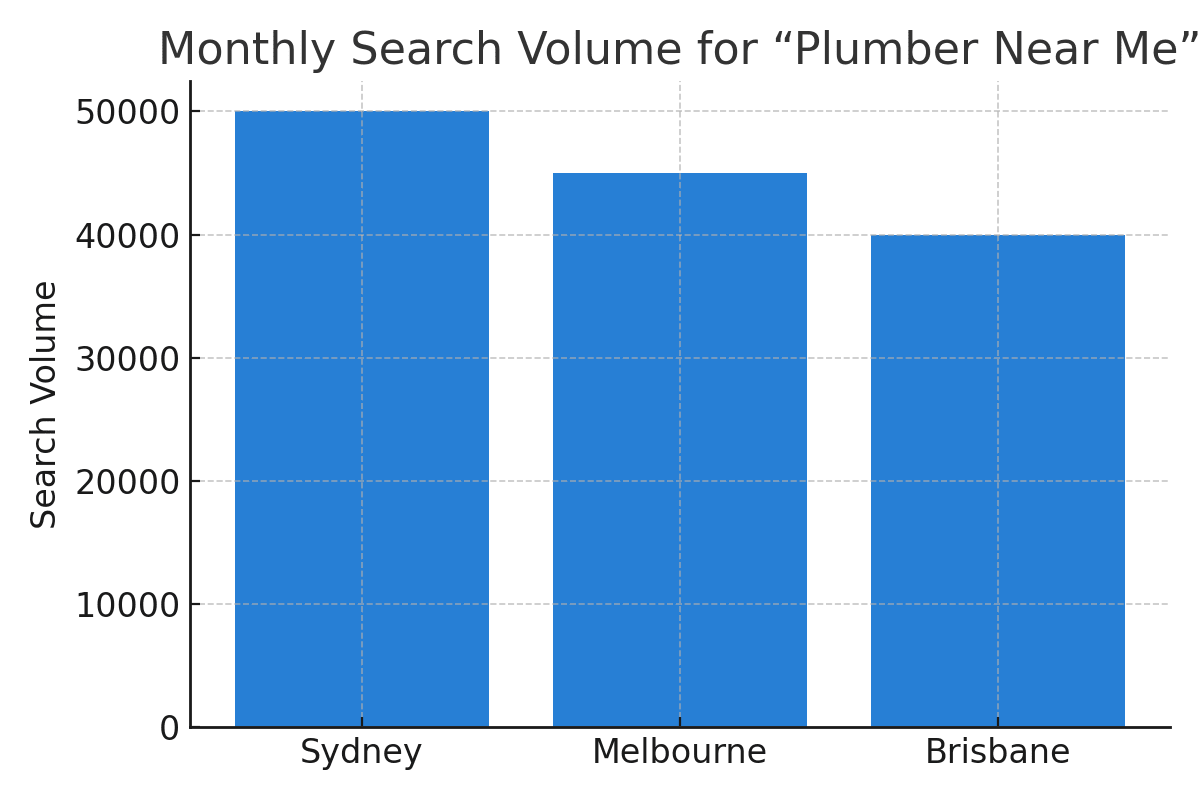
In Australia’s competitive plumbing industry, Local SEO is essential to stand out in Sydney, Melbourne, and Brisbane. When people search for plumbing services, they commonly use terms like “plumber near me” or “24/7 plumber Sydney”. With over 135,000 monthly searches for “plumber near me” and nearly 30 % of mobile searches having local intent, mastering local search can significantly boost online visibility and revenue.
To truly succeed across these cities, you’ll need:
- City-specific keywords
- Locally relevant content
- Optimized Google Maps presence
- Effective review and lead tracking
- Addressing Suburb-level targeting and multi-location issues
- A continuous performance and monitoring strategy
1. City-Specific Keywords
1.1 Understanding Search Behavior in Each City
User intent and competitive levels vary across cities:
- Sydney: High population density means intense competition. Keywords like “emergency plumber Sydney CBD” offer strong ROI, especially when paired with high-conversion landing pages.
- Melbourne: Suburban strongholds like “plumber in Carlton” or “blocked drain Brunswick” are valuable due to rising infrastructure and renovation projects.
- Brisbane: With growing suburbs and frequent rainfall, targeting “Brisbane Northside plumber” or “plumbing services Fortitude Valley” is effective for drain cleaning and stormwater services.
Graph: Monthly Search Volume for “Plumber Near Me”
1.2 Suburb-Level Targeting
To capture hyper-local intent, create suburb-specific service pages (e.g., “plumber in Mosman” or “Hawthorn plumbing services”). Add unique content per suburb highlighting specific problems (e.g., older pipes in heritage zones or frequent flooding in low-lying suburbs).
Include:
- Suburb-specific headings and content
- Internal links to nearby areas
- Customer reviews from that area
- Google Maps embeds with pin drops
This mirrors best practices from service-area businesses and avoids losing relevance in broad marketplaces.
Tip: Use tools like Keyword Planner and Ahrefs to find high-volume keywords such as “24/7 plumber + suburb”. Cross-reference with Google Trends for seasonal spikes.
1.3 Tackling Multi-Location Issues
If your business serves multiple locations:
- Maintain a general homepage (e.g., “Plumbing Services Sydney & Surrounds”).
- Create unique location pages for each city/suburb with distinct content.
- Use distinct NAPU and embedded Google Maps to avoid keyword cannibalization.
- Optimize internal linking and metadata accordingly.
- Assign different phone numbers or trackable UTM links to each location to accurately assess traffic and leads.
2. Local Content
2.1 Creating Valuable Service Pages
Each location page should include:
- City/suburb name in title/meta tags.
- Overview of services (e.g., blocked drains, gas fitting).
- Unique customer testimonials from that area.
- Embedded map and trust signals (license numbers, insurance, Green Plumbers affiliation).
- Service area list (e.g., “We cover Balmain, Haberfield, Leichhardt…”).
- Service-specific FAQs (e.g., “Do you offer emergency plumbing in Richmond after hours?”)
2.2 Blog Topics That Resonate
Regular content marketing through blogging boosts topical authority. Focus on solving local problems and trending issues:
- “How to keep your Brisbane hot water running in winter”
- “Signs your Sydney sewer needs attention before the rainy season”
- “Melbourne backflow testing: what homeowners need to know”
- “Top 5 reasons for high water bills in suburban Brisbane homes”
Local blog media can attract backlinks from neighborhood forums and councils, boosting authority and click-through rates.
2.3 Structured Data & Schema
Employ Local Business schema on location pages to enhance search visibility for local listings. Include fields like address, opening Hours, telephone, review, and geo.
Adding structured data also improves eligibility for rich results like star ratings, service availability, and sitelinks in search engine results pages (SERPs).
3. Google Maps Setup
3.1 Optimize Your Google Business Profile (GBP)
GBP (formerly GMB) is the cornerstone of local search success. Key optimizations:
- Accurate NAPU for each location.
- Primary category: “Plumber”, plus secondary categories like “Drain Service”.
- Service areas: List suburbs served for each location.
- Business description with city/suburb keywords.
- Photos & Posts: Showcase completed jobs, van shots, seasonal offers.
- Reviews: Encourage and respond to customer feedback.
- Q&A section: Add FAQs like “Do you offer weekend services?” and “What are your emergency rates?”
3.2 Technical GBP Ranking Factors
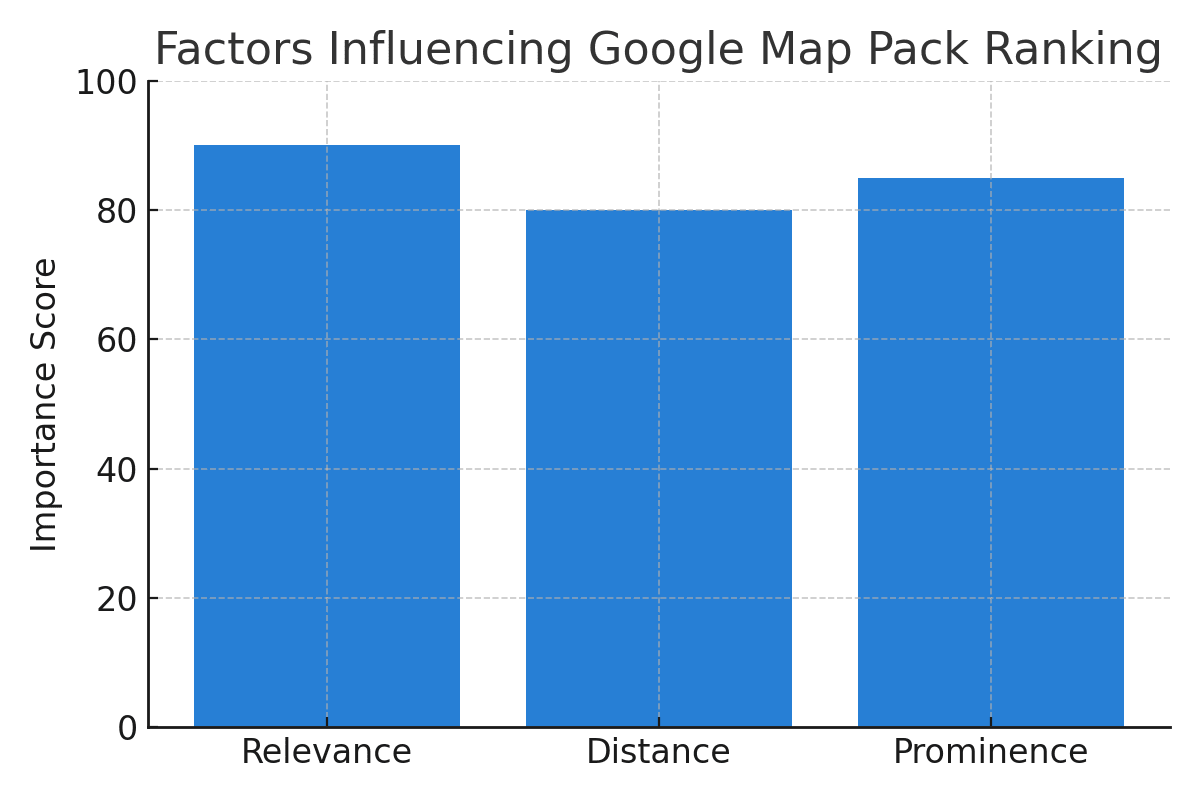
Rankings rely on Relevance, Distance, and Prominence.
- Relevance: Match search queries using keywords and categories.
- Distance: Proximity to searcher’s location (especially on mobile).
- Prominence: Quality and quantity of reviews, backlinks, and citations.
Graph: Factors Influencing Google Map Pack Ranking
For multi-location setups, manage GBP through location-specific dashboards or tools like BrightLocal, Yext, or Moz Local.
Ensure regular updates to hours, images, services, and Q&A—Google favors active profiles.
4. Review & Lead Tracking
4.1 The Power of Reviews
- High ratings influence visibility: 5-star profiles perform significantly better.
- Plumbing customers typically check reviews for punctuality, pricing transparency, and emergency reliability.
4.2 Generating More Reviews
- Prompt customers immediately after services via SMS/email.
- Use QR-coded review cards for quick access to your review form.
- Automate reminder emails 24–48 hours post-service using CRM systems.
- Offer a small branded thank-you gift (e.g., discount voucher or checklist magnet).
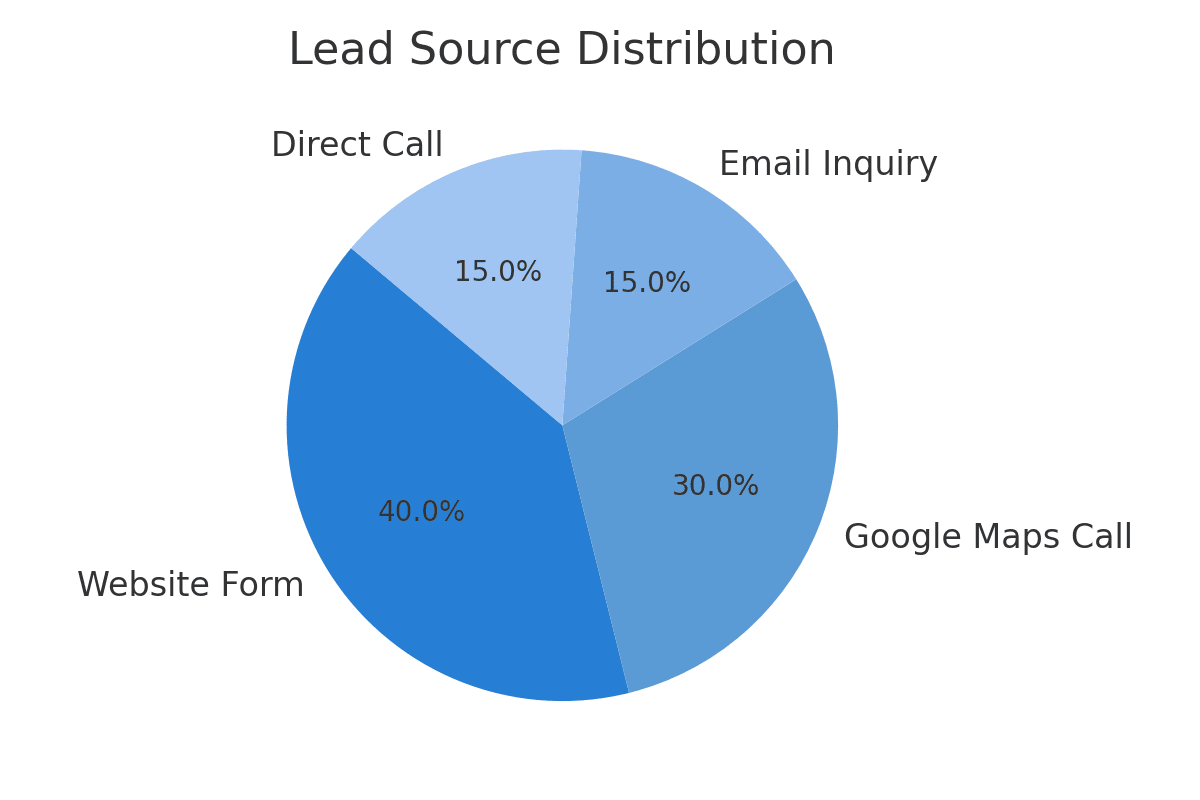
4.3 Tracking Reviews and Leads
- Google GBP Insights: track calls, website clicks, direction requests.
- Use form tracking on location pages (e.g. HubSpot, Zoho, Gravity Forms).
- Monitor keyword positions for each suburb using tools like SEMrush or SERanking.
- Use UTM parameters to evaluate campaign performance and attribute traffic.
- Implement call tracking numbers to identify which city or campaign generated the lead.
Graph: Lead Source Distribution
5. Citations & Backlinks
- List on local directories: TrueLocal, Oneflare, HiPages, ServiceTasker.
- Use suburb-targeted platforms (e.g. local council business directories).
- Obtain backlinks by sponsoring local events or charities.
- Ensure NAPU consistency: critical to avoid confusion and penalty.
6. Technical & Ongoing Strategy
Mobile & Speed Optimization
With 30 % of mobile searches having local intent, ensure fast-loading, mobile-first web design optimized for 3G/4G.
Schema & Structured Data
Implement schema for Service, Local Business, and FAQ pages to improve SERP visibility.
Content Expansion
Maintain a blog section with local guides, city updates, and plumber-savvy tips. This can also nurture backlinks from local news outlets.
Monitoring & Maintenance
- Track SERP positions for keywords like “plumber + suburb name”.
- Use GBP insights for map pack visibility.
- Conduct quarterly audits for GBP completeness, citation consistency, broken links, and outdated NAP data.
Common Questions About Local SEO for Plumbers in Australia
- How long does local SEO take to show results? Most plumbers begin seeing improvements in 3–6 months if consistently optimizing location pages, GBP profiles, and gathering reviews.
- Should I target all suburbs at once? No. Start with your top-performing or most profitable suburbs and gradually expand. Prioritize those where you have real client work or existing presence.
- What is the most important local SEO ranking factor? A well-optimized Google Business Profile, complete with keywords, reviews, and photos, plays the biggest role in Maps rankings.
- How often should I update my local content? Aim to update your location pages and GBP every 4–6 weeks. Fresh content and images signal relevance to Google.
- Can I do SEO for multiple cities from a single website? Yes, but ensure each city or suburb has its own page with unique, non-duplicate content and a clear service focus.
Conclusion
Mastering Local SEO for Sydney, Melbourne, and Brisbane plumbers requires a structured, city and suburb-level approach. By focusing on:
- City and suburb-specific keywords
- Tailored location-based content and schema
- Optimized GBP for each location
- Review generation and tracking systems
- Consistent citations and strong backlinks
- Ongoing technical SEO and performance monitoring
you position your plumbing brand as the go-to choice across multiple service areas, overcoming multi-location issues with clarity and trust.
This strategy will grow online leads, phone calls, and bookings, while also cementing local authority in each market.
If you’re looking to implement these steps, consider starting with a location audit or seeking professional help for long-term growth.
We design high-performing websites and deliver SEO that gets results. Trusted by businesses across the UK, US, AU, and CA.
www.theseocrunch.com | theseocrunch@gmail.com