In today’s digital world, a website is one of the most important assets for any business, startup, personal brand, or organization. A professionally designed website helps businesses build trust, attract customers, improve visibility, and increase conversions. Whether someone wants to create an eCommerce store, portfolio website, service-based website, or blog, understanding the proper website design process is essential for success.
Many people think website design only focuses on colors and layouts. In reality, designing a successful website involves planning, research, user experience, content strategy, development, testing, and maintenance. A website should not only look attractive but also perform efficiently across desktop and mobile devices.
Modern users expect websites to load quickly, provide easy navigation, and deliver valuable information. Search engines like Google also prioritize websites that offer excellent user experience, mobile responsiveness, and SEO optimization. Because of this, businesses need a structured process to create websites that satisfy both users and search engines.
A well-designed website can help businesses increase customer engagement, generate leads, improve online reputation, and strengthen brand identity. On the other hand, a poorly designed website can frustrate visitors, reduce conversions, and negatively affect search rankings. This is why businesses should follow a proper website design process instead of focusing only on visual appearance.
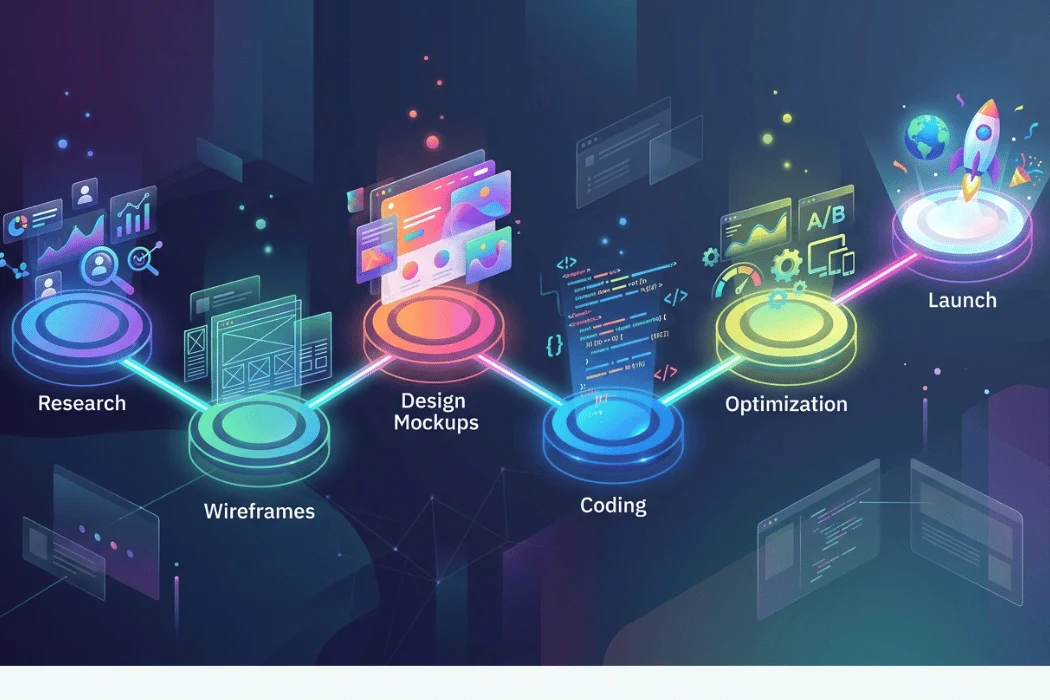
This article explains the 7 major steps to designing a website and why each step is important for building a successful online presence.

Importance of Following a Web Design Process for SEO and Website Optimization
Before starting the 7 major steps, businesses should understand why a proper website design process is important. A structured website development process helps create a successful website that is user-friendly, SEO-optimized, mobile responsive, and visually appealing.
Following a clear web design process helps businesses:
- Improve user experience
- Increase website traffic
- Build customer trust
- Improve SEO rankings
- Reduce technical issues
- Increase leads and conversions
Businesses that follow a proper website design strategy are more likely to create websites that perform successfully in competitive digital markets.
1. Define the Website Goals and Purpose
The first and most important step in website design is defining the website goals and purpose. Every website should have a clear objective before the design process begins. Without a clear strategy, businesses may create a website that fails to meet customer expectations or business goals.
Some common website goals include:
- Generating leads
- Selling products online
- Increasing brand awareness
- Sharing educational information
- Promoting services
- Building customer engagement
- Creating an online portfolio
- Improving customer support
Businesses should identify their target audience and understand what users expect from the website. This helps create a website structure that aligns with customer behavior and business requirements.
Important questions businesses should ask during this stage include:
- Who is the target audience?
- What problems will the website solve?
- What actions should visitors take?
- What type of content is required?
- Which competitors already exist in the market?
For example, an eCommerce website focuses heavily on product pages, customer reviews, secure checkout systems, and trust signals. A portfolio website focuses more on project showcases, design quality, and visual presentation. A business service website may prioritize lead generation forms and consultation requests.
Defining goals early helps businesses avoid confusion later in the website design process and creates a strong foundation for future development.
2. Conduct Research and Competitor Analysis
Once website goals are defined, the next step is conducting research and competitor analysis. Research helps businesses understand industry trends, customer expectations, and successful design strategies used by competitors.
Competitor analysis is extremely valuable because it allows businesses to study websites that already perform well within their industry. However, the goal is not to copy competitors. Instead, businesses should identify opportunities to improve user experience and create a unique value proposition.
Research helps identify:
- Popular website layouts
- User-friendly navigation styles
- Industry trends
- SEO opportunities
- Customer preferences
- Content gaps
- Competitor strengths and weaknesses
Businesses should also study how competitors organize content, use call-to-action buttons, structure navigation menus, and optimize pages for mobile devices.
Useful Research and SEO Tools
| Tool | Purpose |
| Google Trends | Analyze search trends |
| SEMrush | Competitor and keyword research |
| Ahrefs | SEO analysis |
| Hotjar | User behavior tracking |
| Google Analytics | Website traffic analysis |
| Google Search Console | Search performance monitoring |
Research also helps businesses discover important long-tail keywords and search queries that users frequently search online.
Examples include:
- How to design a professional website
- Website design process for beginners
- Best website layout for small businesses
- SEO-friendly website design tips
- Mobile responsive website guide
- Website planning and development process
- Essential website design features
- How to improve website user experience
- Website design checklist for beginners
- Professional business website design tips
Using these search queries naturally throughout the content helps improve SEO performance and increases search visibility.
3. Plan the Website Structure and Sitemap
After completing research, businesses should create a website structure and sitemap. A sitemap acts as a blueprint that organizes all website pages logically and helps users navigate the website easily.
A good website structure improves:
- User experience
- Website navigation
- Search engine crawling
- Content organization
- SEO performance
Most professional websites include pages such as:
- Homepage
- About Us
- Services
- Products
- Blog
- Testimonials
- FAQ Page
- Contact Page
A well-organized structure allows visitors to find information quickly without confusion. Modern users expect websites to be simple, organized, and easy to use.
Important Elements of Website Structure
| Website Element | Purpose |
| Navigation Menu | Helps users explore pages |
| Internal Linking | Connects related pages |
| URL Structure | Improves SEO organization |
| CTA Buttons | Encourages user actions |
| Categories | Organizes content clearly |
Poor navigation is one of the most common reasons users leave websites. Visitors usually leave if they cannot find information quickly.
Businesses should also focus on creating a clear user journey. For example, visitors should easily move from the homepage to service pages, contact forms, or product pages without difficulty.
A good sitemap also helps search engines understand page relationships and improves indexing performance.
4. Design the Website Layout and User Experience
The fourth step focuses on creating the website layout and improving user experience (UX). This stage determines how the website looks and how users interact with it.
A successful website design should balance:
- Visual appeal
- Simplicity
- Readability
- Accessibility
- Functionality
Important website design elements include:
- Color scheme
- Typography
- White space
- Images and graphics
- Buttons
- Branding consistency
- Responsive design
Modern websites must be mobile responsive because a large percentage of users browse websites using smartphones and tablets. Google also uses mobile-first indexing, meaning mobile optimization directly affects SEO rankings.
Good vs Poor Website Design
| Good Website Design | Poor Website Design |
| Fast loading speed | Slow loading pages |
| Clear navigation | Confusing menus |
| Mobile responsive | Desktop-only layout |
| Organized content | Cluttered design |
| Readable fonts | Tiny text |
| Clear CTA buttons | No user direction |
Good user experience encourages visitors to stay longer on the website, explore more pages, and take important actions such as contacting the business or purchasing products.
Websites should also use consistent branding elements like logos, colors, and fonts to build trust and improve recognition.
5. Create High-Quality Website Content
Content is one of the most important parts of a successful website. Even a visually attractive website can fail if the content is unclear, outdated, or poorly written.
Website content should:
- Provide value to users
- Answer customer questions
- Improve SEO rankings
- Build trust
- Encourage conversions
Important website content includes:
- Homepage content
- Service descriptions
- Product descriptions
- Blog articles
- FAQs
- Testimonials
- Case studies
Content should be written clearly and structured properly using headlines, subheadings, bullet points, and short paragraphs for readability.
Businesses should focus on creating user-focused content instead of writing only for search engines. High-quality content helps visitors understand products, services, and business value more effectively.
Benefits of High-Quality Website Content
| Benefit | Impact |
| Better SEO rankings | Improves visibility |
| Increased engagement | Keeps visitors longer |
| Higher trust | Builds credibility |
| More conversions | Generates leads and sales |
| Better authority | Strengthens brand reputation |
SEO optimization is also important during content creation. Businesses should naturally include long-tail keywords and relevant search queries throughout the content without keyword stuffing.
Content that provides genuine value performs better in search results and improves user satisfaction.
6. Develop and Test the Website
Once the design and content stages are complete, developers begin building the website using coding languages, CMS platforms, or website builders.
Popular Website Technologies
| Technology | Purpose |
| HTML | Website structure |
| CSS | Website styling |
| JavaScript | Interactive features |
| WordPress | Content management |
| Shopify | eCommerce websites |
| React | Modern web applications |
Website development should focus on:
- Speed optimization
- Mobile responsiveness
- Security
- SEO optimization
- Accessibility
- Browser compatibility
Testing is extremely important before launching the website because even small technical issues can negatively affect user experience.
Important Website Testing Areas
- Mobile responsiveness
- Page loading speed
- Navigation functionality
- Broken links
- Contact forms
- Checkout systems
- Browser compatibility
Popular Website Testing Tools
| Tool | Purpose |
| Google PageSpeed Insights | Speed testing |
| GTmetrix | Performance analysis |
| Lighthouse | SEO and UX testing |
| BrowserStack | Browser compatibility testing |
Testing ensures the website functions properly across different devices and browsers. Businesses should fix all technical issues before launching the website publicly.
7. Launch, Monitor, and Maintain the Website
Launching the website is not the final step. Ongoing monitoring and maintenance are essential for long-term success.
Regular website maintenance helps:
- Improve website security
- Fix technical problems
- Update content
- Improve SEO performance
- Maintain loading speed
- Build customer trust
Important Website Maintenance Tasks
- Updating plugins and software
- Backing up website data
- Monitoring website performance
- Updating blog content
- Fixing broken links
- Checking security vulnerabilities
Businesses should also monitor website performance using analytics tools.
Important Website Metrics
| Metric | Importance |
| Bounce Rate | Measures engagement |
| Conversion Rate | Tracks leads and sales |
| Organic Traffic | Shows SEO performance |
| Page Speed | Affects UX and rankings |
| User Behavior | Identifies improvement areas |
Continuous optimization helps businesses adapt to changing user behavior, SEO updates, and industry trends.
Websites that are regularly updated and maintained usually perform better in search rankings and provide a more secure experience for visitors.
Why These 7 Steps Matter
Following a structured website design process helps businesses create websites that are visually appealing, SEO-friendly, user-focused, and conversion-optimized.
Benefits of Following These Steps
- Better user experience
- Higher search engine rankings
- Increased website traffic
- Improved customer trust
- Better conversion rates
- Stronger online visibility
- Long-term website performance
A website created without proper planning often struggles with poor usability, low engagement, and weak SEO performance.
Businesses that invest time in planning, design, optimization, and maintenance are more likely to achieve long-term online success.
FAQs
What is the first step in designing a website?
The first step is defining the website goals, target audience, and overall purpose. Proper planning creates a clear website strategy.
Why is mobile responsiveness important in website design?
Mobile responsiveness ensures websites work properly on smartphones and tablets. It also improves user experience and search engine rankings.
How does SEO help a website?
SEO improves website visibility on search engines like Google. It helps increase organic traffic and attract more potential customers.
What makes a website user-friendly?
Clear navigation, fast loading speed, readable content, and mobile responsiveness make a website user-friendly.
Why is website maintenance necessary?
Website maintenance keeps the site secure, updated, and optimized for performance. It also helps prevent technical issues and improve user trust.
Conclusion
Designing a successful website requires more than just great design. Businesses must follow a proper website creation process and web development process to create a fully functioning website. These seven steps help businesses build websites with strong responsive design, better website performance, and professional visual design and content.
Whether creating a custom website, web application, or a website from scratch, every website needs proper planning, clear design elements, and quality content on your website. During front-end development, designers often use tools like Figma and tools like Balsamiq to organize the basic structure of a page, choose suitable fonts and colors, and define the scope of the project.
Businesses should also optimize titles and descriptions, clearly describe your business, and test each page before they launch the website. By following the right strategy, businesses can confidently start designing and building a site that attracts customers or clients and performs successfully in the long term.