In today’s competitive digital environment, a business website is often the first interaction potential customers have with a company. Consumers judge businesses within seconds based on how their websites look, function, and perform. An outdated website can create a poor first impression, reduce trust, hurt search engine rankings, and ultimately drive customers away.
Many businesses underestimate the importance of maintaining a modern website. While a website may still technically function, outdated design, slow performance, poor mobile responsiveness, and old content can negatively impact customer experience. As online competition continues to increase, businesses with outdated websites often lose customers to competitors that provide better digital experiences.
A modern website is no longer just an online brochure. It acts as a marketing tool, customer service platform, lead generation system, and sales channel. Businesses that fail to update their websites risk losing visibility, conversions, and long-term growth opportunities.

Understanding What Makes a Website Outdated
An outdated website is not simply a website that looks old. It includes multiple performance, usability, design, and technical issues that affect customer experience.
Common Signs of an Outdated Website
| Website Problem | Impact on Customers |
| Slow loading speed | Users leave quickly |
| Non-responsive design | Poor mobile experience |
| Old visual design | Reduces trust |
| Broken links | Frustrates visitors |
| Difficult navigation | Confuses users |
| Outdated content | Lowers credibility |
| Poor SEO structure | Reduces search visibility |
Businesses searching for terms like:
- why outdated websites hurt business
- signs your website needs redesign
- modern website design benefits
- how website design affects conversions
- outdated website SEO problems
- why responsive website design matters
- website redesign for better conversions
- slow website losing customers
- how to improve website user experience
- benefits of updating business website
are often trying to understand why their website performance has declined.
First Impressions Strongly Influence Customer Decisions
Website visitors form opinions extremely quickly. Research consistently shows that users judge a website’s credibility within seconds.
If a website looks outdated, users may assume:
• The company lacks professionalism
• Customer service may be poor
• Security standards may be outdated
• Products or services may also be outdated
A modern website design creates confidence and encourages users to stay longer.
Elements That Affect First Impressions
| Design Element | Customer Perception |
| Clean layout | Professional business |
| Modern typography | Trustworthy brand |
| High-quality images | Premium experience |
| Fast loading speed | Reliable company |
| Mobile responsiveness | User-focused business |
Outdated visuals immediately reduce trust and engagement.
Poor Mobile Experience Drives Users Away
Mobile traffic now dominates internet browsing. Businesses that fail to optimize websites for smartphones and tablets lose significant numbers of customers.
Problems With Non-Responsive Websites
• Buttons difficult to tap
• Images not scaling properly
• Broken layouts on mobile devices
• Slow mobile performance
Modern responsive web design automatically adapts layouts to different screen sizes.
Benefits of Responsive Design
| Benefit | Result |
| Better mobile usability | Higher engagement |
| Improved SEO rankings | More visibility |
| Lower bounce rates | Better retention |
| Easier navigation | Improved conversions |
Google also prioritizes mobile-friendly websites in search results through mobile-first indexing.
Slow Website Speed Hurts Conversions
Website speed is one of the biggest factors affecting customer experience.
Users expect websites to load quickly. If a website takes too long, visitors often abandon it before interacting with the content.
Common Causes of Slow Websites
• Poor hosting services
• Excessive plugins
• Outdated coding practices
• Unoptimized scripts
Website Speed and User Behavior
| Loading Time | User Impact |
| 1–2 seconds | Excellent experience |
| 3–4 seconds | Acceptable |
| 5+ seconds | Increased abandonment |
Slow websites negatively impact:
• Conversion rates
• SEO rankings
• Engagement metrics
Businesses with fast websites often outperform competitors significantly.
Outdated Websites Damage SEO Performance
Search engine optimization depends heavily on website quality, usability, speed, and mobile compatibility.
Older websites often struggle with SEO because they lack modern optimization practices.
Common SEO Problems on Outdated Websites
• Poor mobile optimization
• Slow page speed
• Broken internal links
• Duplicate content issues
• Weak site structure
Modern SEO requires websites to provide excellent user experiences.
Important SEO Ranking Factors
| SEO Factor | Importance |
| Mobile responsiveness | Very high |
| Fast loading speed | High |
| User engagement | High |
| Secure HTTPS connection | Essential |
| Structured content | Important |
Without proper optimization, businesses lose visibility in search engine results.
Poor User Experience Reduces Engagement
User experience (UX) refers to how easily users interact with a website.
Outdated websites often create frustration due to confusing layouts, poor navigation, and inconsistent design.
Common UX Problems
• Difficult navigation menus
• Poor readability
• Too many popups
• Inconsistent layouts
Good UX helps users quickly find the information they need.
Characteristics of Modern UX Design
| UX Principle | Benefit |
| Simplicity | Easier navigation |
| Clear structure | Better usability |
| Visual hierarchy | Improved readability |
| Consistency | More intuitive experience |
| Accessibility | Broader audience reach |
Businesses that improve UX often experience higher customer retention and conversions.
Outdated Branding Reduces Customer Confidence
Brand perception strongly influences purchasing decisions.
An outdated website can make even successful businesses appear unprofessional.
Signs of Outdated Branding
• Inconsistent colors
• Low-quality graphics
• Generic templates
• Poor typography
Modern branding creates emotional connections and improves recognition.
Professional branding helps businesses:
• Increase credibility
• Improve customer loyalty
• Differentiate from competitors
Customers are more likely to engage with businesses that appear modern and established.
Security Concerns Affect Customer Trust
Online security is a major concern for internet users.
Older websites often lack modern security standards.
Security Problems Found on Outdated Websites
• Outdated software versions
• Vulnerable plugins
• Weak security protocols
Users may avoid websites that display security warnings.
Security Features Modern Websites Need
| Security Feature | Purpose |
| HTTPS encryption | Protects data |
| Regular updates | Prevents vulnerabilities |
| Secure payment systems | Builds trust |
| Firewall protection | Blocks attacks |
Secure websites improve both customer confidence and search rankings.
Outdated Content Reduces Credibility
Content freshness matters significantly for both users and search engines.
Old blog posts, outdated service information, and expired offers can damage trust.
Problems Caused by Outdated Content
• Old pricing details
• Irrelevant articles
• Expired promotions
• Broken resources
Fresh content demonstrates that a business is active and reliable.
Benefits of Regular Content Updates
• Improved customer trust
• Higher engagement
• More returning visitors
Modern websites require ongoing content maintenance.
Competitors With Better Websites Win Customers
Consumers often compare businesses online before making decisions.
If competitors offer faster, cleaner, and more professional websites, customers are more likely to choose them.
Competitive Advantages of Modern Websites
| Modern Website Feature | Customer Benefit |
| Fast performance | Better experience |
| Modern visuals | Increased trust |
| Mobile optimization | Easier browsing |
| Better SEO | Easier discovery |
| Clear CTAs | Simplified actions |
Businesses that ignore website modernization often lose market share over time.
How Modern Websites Improve Customer Retention
Modern websites help businesses retain customers by improving experiences and simplifying interactions.
Important Retention Features
• Faster support access
• Easy contact options
• Simple checkout processes
• Helpful resources
Customer-friendly websites encourage repeat visits and long-term loyalty.
Signs Your Business Website Needs a Redesign
Businesses should regularly evaluate website performance.
Key Warning Signs
• Low conversion rates
• Poor mobile usability
• Slow loading times
• Declining SEO rankings
• Outdated visuals
• Low engagement metrics
A redesign may significantly improve business performance.
Essential Features of Modern Business Websites
Modern websites include features designed for performance, usability, and conversion optimization.
Core Modern Website Features
| Feature | Purpose |
| Responsive design | Mobile compatibility |
| Fast speed optimization | Better performance |
| SEO-friendly structure | Higher rankings |
| Clear CTAs | Increased conversions |
| Modern UI/UX | Better usability |
| Secure HTTPS | Customer trust |
These elements work together to create positive customer experiences.
Benefits of Website Redesign
A website redesign can transform business performance.
Major Benefits Include
• Better conversions
• Improved customer trust
• Higher search rankings
• Better brand image
• Enhanced usability
Businesses investing in modern web design often experience strong long-term returns.
Continuous Website Improvement Matters
Website optimization is an ongoing process rather than a one-time project.
Businesses should continuously:
• Update content
• Improve speed
• Test user experience
• Enhance mobile performance
Continuous improvements help businesses stay competitive in changing digital markets.
Frequently Asked Questions
Why do outdated websites lose customers?
Outdated websites create poor user experiences, reduce trust, and often perform badly on mobile devices and search engines.
Does website design affect customer trust?
Yes, modern professional design helps businesses appear trustworthy and credible to visitors.
Why is responsive website design important?
Responsive design improves usability across mobile, tablet, and desktop devices, which increases engagement and conversions.
How does website speed affect conversions?
Slow websites frustrate users and increase bounce rates, leading to fewer sales and customer inquiries.
How often should businesses redesign their websites?
Most businesses should review and update their website every 2–3 years to stay modern and competitive.
Conclusion
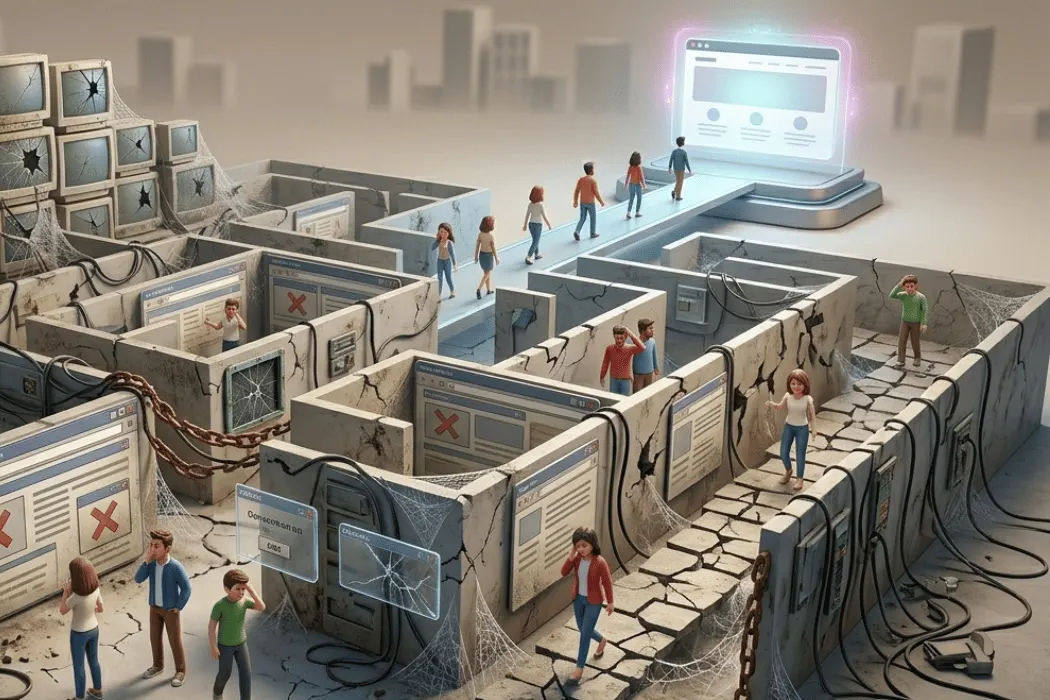
Outdated websites lose customers because they fail to meet modern user expectations. Slow loading speeds, poor mobile experiences, weak security, outdated visuals, and confusing navigation all contribute to lower trust and reduced engagement. In today’s competitive digital environment, users expect websites to be fast, responsive, visually appealing, and easy to navigate.
A modern website improves customer confidence, supports SEO rankings, enhances user experience, and increases conversions. Businesses that invest in website modernization can attract more visitors, retain customers longer, and compete more effectively online.
Website design is no longer optional for business success. It directly influences customer perception, search visibility, and revenue growth. Companies that continuously improve their websites position themselves for long-term digital success and stronger customer relationships.