In today’s fast-paced digital landscape, search engine optimization (SEO) is essential for running a successful online presence. While SEO can be broadly categorized into on-page SEO and off-page SEO, on-page optimization is where businesses and website owners have the most control. It involves elements on a webpage that help search engines understand your content, improve ranking, and enhance user experience. Proper SEO practices ensure your web pages are indexed and displayed in search results for relevant search queries.
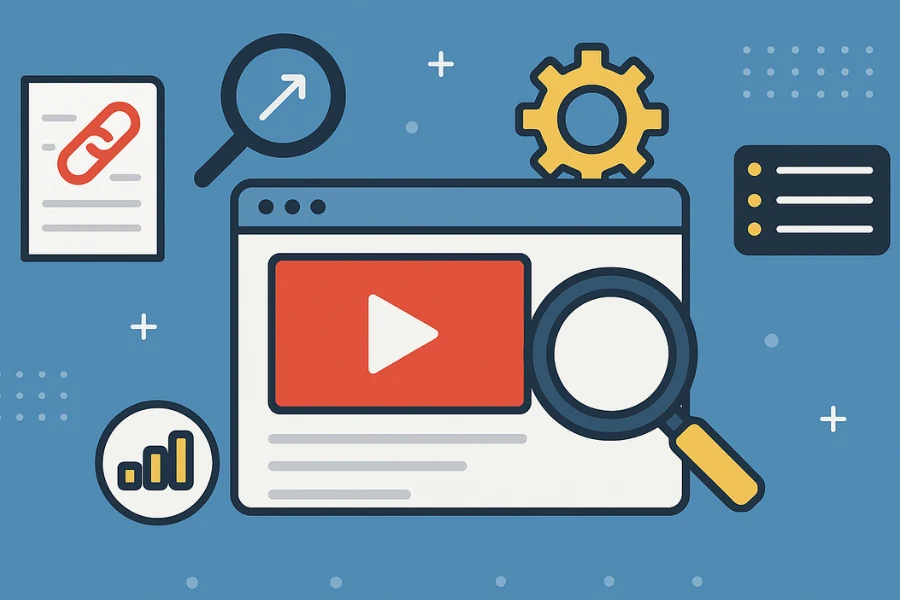
What is On-Page & Video SEO: Optimize Your Video, Thumbnail, and Google Search
On-page SEO refers to optimizing all aspects of a webpage, including content on your site, title and description, HTML code, internal linking, media, and user experience, to help search engines understand the page and rank higher in search results. Unlike off-page SEO (like backlinks or brand mentions), on-page SEO is fully within your control.
- Improved Visibility: Helps search engines find and index pages efficiently.
- Relevance: Using the right keywords ensures content matches search intent.
- User Experience: Structured, readable content with optimized video content and video thumbnails keeps users engaged.
- Competitive Edge: Optimized pages, video pages, and proper schema markup can achieve better SEO results than competitors.
For example, two restaurants with similar websites, one using optimized headings, video embeds, video descriptions, and thumbnails, and the other ignoring these, will perform differently in Google search results.
EEAT: Quality Content, SEO & Video SEO Guide to Optimize Video on Your Website
Google evaluates not just technical compliance but also content credibility. EEAT, Experience, Expertise, Authoritativeness, Trustworthiness, determines which sites earn higher rankings.
- Experience: First-hand knowledge, such as a video guide showing practical steps, strengthens user trust.
- Expertise: SEO content should be created by knowledgeable individuals; proper video SEO adds authority.
- Authoritativeness: Backlinks and mentions from trusted sources boost recognition.
- Trustworthiness: Secure HTTPS, accurate sources, and transparent policies ensure visitors trust your site.
The Google Helpful Content Update emphasizes combining technical SEO and video SEO best practices to create authoritative and engaging content.
Keyword Strategy & Search Intent: SEO, Video SEO, On-Page Optimization
Keywords are the backbone of on-page SEO, but modern SEO focuses on search intent.
Types of Search Intent:
- Informational: Users want knowledge (e.g., “on-page video SEO guide”).
- Navigational: Users search for a brand or video (e.g., “YouTube video SEO tutorial”).
- Transactional: Ready to take action (e.g., “buy SEO software online”).
- Commercial Investigation: Comparing options (e.g., “best SEO services”).
Targeting the right intent ensures your content on your website, including embedded videos, aligns with search engine results pages (SERPs).
On-Page SEO & Video SEO Guide to Optimize Content
Optimizing on-page elements helps search engines understand your page and can improve SEO results:
a.Title Tags: Include the main keyword, 60 characters max, e.g., “On-Page SEO & Video SEO Guide.”
b. Meta Descriptions: Under 160 characters; summarize content for rich snippets and search engine results.
c. URL Structure: Clean and descriptive (www.example.com/on-page-video-seo).
d. Headings (H1, H2, H3…): Include focus keywords and break content into readable sections.
e. Content Quality: Original, comprehensive, engaging content like videos for search.
f. Internal Linking: Connect related pages to improve crawlability and user experience.
g. External Linking: Link to authoritative sources (Google Search Console documentation).
h. Image & Video Optimization: Use descriptive filenames, alt text, and video thumbnails.
i. Page Speed & Core Web Vitals: Fast-loading pages improve SEO results and user engagement.
j. Mobile Friendliness: Essential for Google search results with mobile-first indexing.
k. Structured Data / Schema Markup: Helps search engines understand video content and generate rich snippets in video search results.
Using Video and Multimedia for SEO
Adding a video enhances on-page SEO by increasing dwell time and providing context.
Best Practices:
- Place video content near the top of the page.
- Provide transcripts so search engines can find the video.
- Optimize video titles, descriptions, and thumbnails with relevant keywords.
- Use video markup and schema to appear in Google video search results.
- Embed YouTube or Vimeo videos to help Google better understand your content.
Video SEO Guide Tip: Videos can appear as rich snippets, video results in Google, or video thumbnails in search engine results pages, driving more traffic to your site.
Content Structure and Readability
- Short paragraphs (2–3 sentences)
- Use lists, tables, and visuals
- Highlight key keywords
- Write conversationally for the target audience
Good readability ensures search engines can find your content and improves user experience.
Technical On-Page Considerations
- HTTPS security
- Robots.txt and sitemap for search engines to index
- Canonical tags
- Pagination & URL parameters
- Fix broken links
These technical elements help Google better understand your web pages, improving SEO results.
Measuring On-Page SEO Success
Tools:
- Google Search Console: Track clicks, impressions, and crawl errors
- Google Analytics: Analyze session duration and engagement
- SEO Plugins & Tools: Ahrefs, SEMrush, Moz for keyword tracking
- PageSpeed Insights: Identify speed issues
Monitoring ensures SEO is the process of ongoing optimization.
Common On-Page SEO Mistakes
- Keyword stuffing
- Thin content
- Ignoring mobile users
- Slow page load speeds
- Poor linking practices
- Missing author info
Avoiding these mistakes improves SEO performance, helps search engines understand your content, and boosts ranking.
Creating a Video Guide Structure
If creating a video on your website, include:
- Introduction
- Benefits of video SEO
- EEAT framework
- Keyword strategy
- On-page elements
- Video & multimedia
- Technical checks
- Monitoring SEO results
- Mistakes to avoid
- Conclusion
Using video content, video thumbnails, and proper markup ensures search engines can find and index your content effectively.
On-Page SEO Checklist
- Optimized title tag & meta description
- Clean, descriptive URL
- Proper headings (H1–H3)
- High-quality, original content with videos for search
- Internal & external links
- Optimized video assets and thumbnails
- Fast-loading, mobile-friendly pages
- Applied schema markup
- Visible author info
Following this ensures SEO best practices, helps search engines understand your video content, and improves Google search results.
FAQs: Understanding On-Page SEO & Video SEO
What is on-page SEO?
On-page SEO is the process of optimizing content on your website, including headings, images, meta tags, HTML code, video markup, and video assets, to improve search engine results, Google Search visibility, user experience, and ranking for target keywords. SEO practices help search engines understand your content and ensure your web pages are indexed properly.
Why is EEAT important for on-page SEO?
EEAT (Experience, Expertise, Authoritativeness, Trustworthiness) helps Google better understand the quality of your video content or written content. Strong EEAT improves search engine rankings, increases traffic to your site, and ensures video results in Google and rich snippets are more likely to appear.
How do long-tail keywords help in on-page SEO?
Long-tail keywords target specific search queries and search terms your target audience uses. Including them in on-page video SEO, video descriptions, video titles, and video thumbnails can help your videos for search and pages rank higher in search and Google video search results.
What technical on-page SEO elements should I check?
Important elements include:
- Page speed and mobile-friendliness
- HTTPS, URL structure, canonical tags
- Structured data or schema markup for videos
- Proper video embedding and video markup so search engines can find your video content
These on-page SEO elements help Google index your video page and video on your website, improving SEO results.
How can video content be used to enhance on-page SEO?
Adding a video can boost user experience, increase dwell time, and improve ranking in Google search results and search engine results pages. Use video SEO best practices:
- Optimize video titles, descriptions, and thumbnails
- Add schema markup or video markup for rich snippets
- Embed the video on your website and link it to related content on your site

Conclusion
On-page SEO combined with technical SEO and video SEO helps your content on your page rank higher in search engine results, appear in rich snippets, and deliver excellent user experience. By embedding video content, using proper video markup, optimizing video thumbnails and descriptions, and following SEO best practices, you ensure search engines can find and understand your content, boosting traffic to your site and improving overall SEO results.