Technical SEO is the backbone of a website’s search engine performance. Even if your content is top-notch and your backlink profile is strong, SEO mistakes can drastically reduce your website’s ability to achieve high search rankings. Search engines increasingly prioritize user experience, site speed, security, and crawlability, making technical SEO an essential aspect of any digital marketing strategy.
Without proper technical optimization, even high-quality content can remain invisible to search engines or fail to engage users effectively. Technical SEO ensures that search engine crawlers can access, understand, and index your web pages efficiently while providing a seamless experience for visitors. In this article, we will explore common SEO mistakes, their impact on ranking and organic traffic, and actionable steps to fix broken links and other technical issues, helping your website achieve both visibility and credibility online.
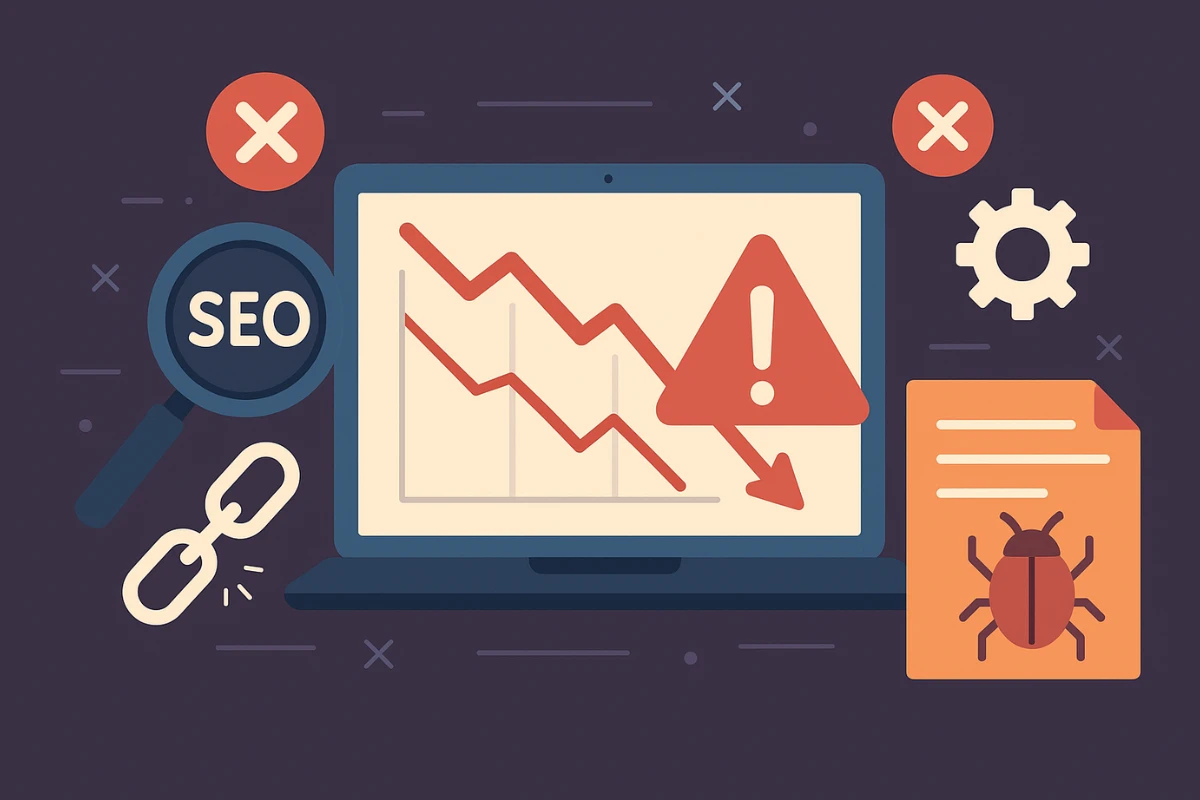
What Are Technical SEO Mistakes That Hurt Your Rankings?
Technical SEO refers to the optimization of a website’s infrastructure to help search engines crawl, index, and rank content efficiently. It ensures that both users and search engines can access and understand your website without issues. While on-page SEO focuses on content, keywords, and meta tags, technical SEO addresses the underlying framework, which directly influences search engine ranking.
At its core, technical SEO ensures that a website is accessible to search engines and provides an excellent user experience. This involves optimizing server performance, enhancing site architecture, improving navigation, and ensuring all elements work cohesively. A well-structured website allows search engines to easily discover all pages, understand the relationships between them, and assign proper ranking signals. For example, clean URL structures, breadcrumb navigation, and internal links improve crawl efficiency and help users find relevant content efficiently.
Another critical aspect of technical SEO is ensuring the website follows SEO best practices. This includes implementing canonical tags to prevent duplicate content, creating XML sitemaps for better indexation, and configuring robots.txt files correctly to control crawling. Additionally, technical SEO involves improving page speed, mobile responsiveness, and secure HTTPS connections, which directly influence search engine optimization and user trust.
Key components of technical SEO include:
- Site speed: Fast-loading pages enhance user experience and reduce bounce rate, directly impacting search engine ranking.
- Mobile responsiveness: Ensures your site works seamlessly across all devices.
- Secure connections (HTTPS): Protects user data and signals credibility to search engines.
- Proper indexation and crawlability: Guarantees that all important web pages are discoverable by search engine crawlers.
- Structured data implementation: Helps search engines understand your content and supports rich search results.
- Fixing broken links and duplicate content: Maintains internal link value, prevents SEO mistakes to avoid, and supports a smooth user experience.
Neglecting these technical elements can hurt your rankings and confuse search engines, even if your content and SEO strategies are otherwise strong. By addressing these foundational aspects, businesses can ensure their content has the best chance of ranking well and attracting organic traffic.
Common Technical SEO Mistakes
Here are the most critical technical SEO mistakes that websites often make:
Slow Page Speed
Impact:
Page speed is a crucial ranking factor. Slow-loading pages frustrate users, increase bounce rate, and reduce dwell time. Google considers page speed when evaluating user experience, and delays of even a few seconds can hurt your SEO performance.
Fixes:
- Optimize images using WebP or other modern formats.
- Enable browser caching and server-side caching.
- Minify CSS, JavaScript, and HTML.
- Use a Content Delivery Network (CDN) to reduce server response time.
- Remove unnecessary scripts or plugins that slow down pages.
Pro Tip: Use Google Search Console, GTMetrix, or Pingdom to continuously monitor page speed and improve technical SEO.
Mobile Unfriendliness
Impact:
Mobile-first indexing means Google uses the mobile version for ranking. Poor mobile usability can reduce search engine visibility and negatively impact user experience.
Fixes:
- Implement a responsive design.
- Ensure touch targets are easily clickable.
- Optimize images and layouts for mobile devices.
- Test mobile usability with Google Search Console or Mobile-Friendly Test.
Duplicate Content
Impact:
Duplicate content can confuse search engines, dilute ranking signals, and reduce the chance of ranking for your target keywords.
Fixes:
- Use canonical tags to indicate the preferred version.
- Consolidate similar pages using 301 redirects.
- Avoid duplicating blog posts or other content across multiple pages.
Example:
If www.example.com/shoes and www.example.com/shoes?color=red exist, the canonical should point to the main shoes page.
Missing or Incorrect Canonical Tags
Impact:
Without proper canonicalization, search engines may index multiple versions of the same content, diluting SEO efforts and confusing search engines.
Fixes:
- Add self-referencing canonical tags to each page.
- Ensure only one version of each page is canonical.
- Update canonical tags after redesigns or restructuring.
Broken Links
Impact:
Broken links can confuse search engines, waste crawl budget, and hurt user experience.
Fixes:
- Regularly audit your site using Screaming Frog, Ahrefs, or similar tools.
- Fix broken links or remove dead internal links.
- Implement 301 redirects for moved or deleted pages.
Missing Alt Text for Images
Impact:
Images without alt text reduce accessibility and prevent search engines from understanding your visual content, limiting organic traffic opportunities.
Fixes:
- Add descriptive alt text for all images.
- Include relevant keywords naturally, avoiding keyword stuffing.
- Ensure every functional image contributes to user intent and content understanding.
No HTTPS Security
Impact:
HTTPS is a confirmed ranking factor. Sites without SSL certificates are marked “Not Secure,” which can reduce trust and affect search engine ranking.
Fixes:
- Obtain an SSL certificate.
- Migrate URLs from HTTP to HTTPS.
- Update internal links and canonical tags accordingly.
Improper Use of Robots.txt
Impact:
Incorrectly configured robots.txt files can block search engine crawlers from important web pages, preventing them from appearing in search results.
Fixes:
- Review robots.txt regularly.
- Test changes with Google Search Console.
- Disallow only irrelevant or duplicate content pages.
Missing or Incorrect XML Sitemaps
Impact:
XML sitemaps guide search engine crawlers to discover and index web pages. Missing or outdated sitemaps can reduce SEO performance.
Fixes:
- Create and submit an XML sitemap via Google Search Console.
- Update the sitemap whenever new pages are added.
- Include only canonical URLs.
Incorrect Meta Robots Tags
Impact:
Wrong meta robots tags can prevent indexing of valuable content or accidentally expose pages that should remain private, hurting search rankings.
Fixes:
- Ensure pages meant for ranking have index, follow tags.
- Use noindex, nofollow for private or duplicate content pages.
- Audit pages regularly for correct meta robots tags.
Best Practices for Technical SEO
- Regular Technical Audits: Detect and fix SEO mistakes to avoid.
- Structured Data: Helps search engines understand your web pages and enhances search results.
- Core Web Vitals Optimization: Improve LCP, CLS, and FID to enhance user experience and SEO performance.
- Crawl Budget Management: Prioritize important pages and avoid duplicate content.
- Internal Linking Structure: Use internal links logically to pass authority and guide search engine crawlers.
Additional Tip: Use tools like Google Search Console, Ahrefs, SEMrush, and Screaming Frog to continuously monitor technical SEO performance.
Advanced Technical SEO Considerations and Common Pitfalls
Even the most carefully crafted content can see its keyword rankings suffer if technical SEO mistakes are present. SEO mistakes that hurt your website often arise from overlooked elements of your site’s technical foundation, and these mistakes that hurt your rankings can hurt your SEO in subtle ways. From link mistakes to missing metadata, understanding the SEO pitfalls and implementing SEO best practices is essential to boost your SEO and maintain strong rankings and traffic.
A thorough SEO audit can help identify SEO errors that may tank your search rankings or lower rankings across both desktop and mobile. Common problems include ignoring SEO elements, overlooking technical SEO, or failing to integrate SEO and user experience. Remember, user experience and technical optimization go hand-in-hand; issues in either can hurt both user experience and SEO impact, negatively affecting your site’s SEO value.
FAQs
What is technical SEO?
Technical SEO involves optimizing the technical aspects of a website to improve search engine ranking, enhance user experience, and avoid SEO mistakes that may hurt your rankings.
Why is page speed important for SEO?
Page speed affects user experience and search rankings. Slow-loading pages increase bounce rate and reduce the chance of ranking.
What are canonical tags and why are they important?
Canonical tags prevent duplicate content, signaling the preferred version of a web page to search engines.
How does mobile optimization impact SEO?
Mobile optimization ensures a user-friendly experience, which is crucial as search engines prioritize mobile-first search engine ranking.
What is structured data and how does it affect SEO?
Structured data provides search engines with detailed information about a web page, improving SEO success and search results visibility.
Conclusion
Technical SEO is an ongoing process ensuring your website is optimized, crawlable, and provides a good user experience. Small issues, like slow pages, broken links, missing canonical tags, or duplicate content, can significantly hurt your rankings and organic traffic. By addressing these technical issues, optimizing internal links, and following SEO best practices, you enhance SEO performance, improve search engine ranking, and increase the chance of ranking higher in search results. Investing in technical SEO is key to long-term SEO success and competitive search engine optimization.