Search engine optimization (SEO) is generally divided into three major areas: on-page SEO, technical SEO, and off-site SEO. While on-page SEO focuses on optimizing website content and technical SEO deals with website infrastructure, off-site SEO builds authority and trust across the internet.
Among all off-site SEO strategies, link building remains one of the most influential ranking factors. Search engines use backlinks as signals to determine how trustworthy and valuable a webpage is. When multiple authoritative websites link to a page, it tells search engines that the content is credible and worth listing in search results higher.
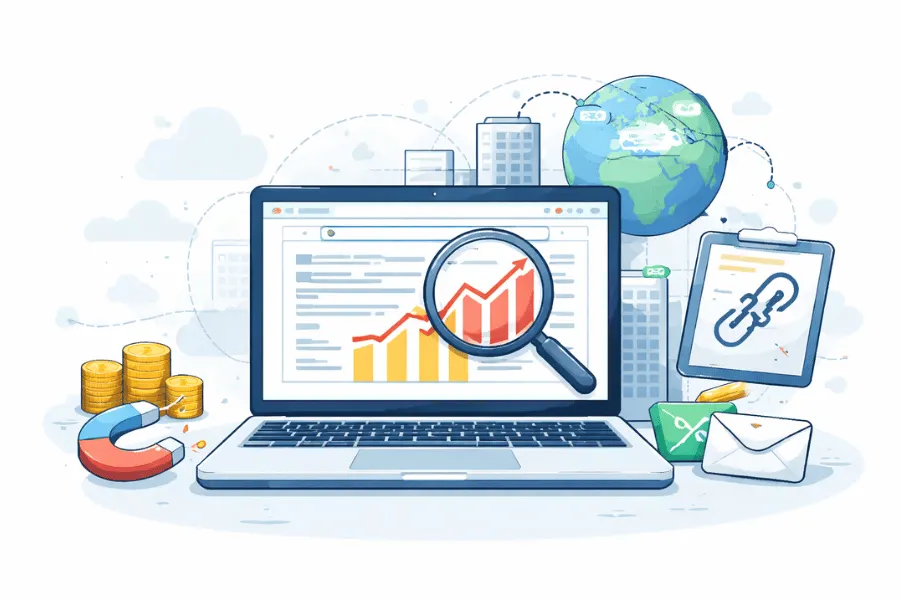
Understanding Off-Page SEO: Link Building Strategies, Backlinks & Boost Organic Traffic Growth
Off-page SEO refers to all optimization activities that happen outside your website but influence its listing in search results in search engines. While on-page SEO focuses on improving the content and structure of a webpage, off-site SEO focuses on building reputation and authority across the web.
The main components of off-page SEO include:
- Backlinks from other websites
- Brand mentions across the web
- Influencer outreach and collaborations
- Social media engagement
- Digital public relations (PR)
- Content promotion
Among these factors, backlinks are considered the strongest signal. When a reputable website links to another website, it acts as a vote of confidence. The more quality votes a page receives, the more likely it is to rank well in search engine results.
However, modern SEO is not simply about getting as many links as possible. Instead, search engines focus on link quality, relevance, and authority.
Case Study Overview: Link Building Strategies, SEO, Backlinks & Organic Traffic Boost
This case study examines the growth of a digital marketing blog that struggled to gain visibility in search platforms despite publishing top-quality content.
The website had invested significant effort in content creation, publishing in-depth guides and tutorials related to marketing and SEO. However, the site lacked authority in the eyes of search platforms because it had very few backlinks.
Initial Challenges
Before implementing a link building strategy, the website faced several issues:
- Low domain authority
- Limited referring domains
- Slow organic traffic growth
- Strong competition from established websites
Although the website had useful content, search platformdid not consider it authoritative enough to rank higher.
Starting SEO Metrics
The website’s performance metrics before the campaign looked like this:
| Metric | Initial Value |
| Domain Authority | 18 |
| Monthly Organic Traffic | 2,200 |
| Referring Domains | 32 |
| Keywords in Top 10 | 14 |
These numbers indicated that the website was still in the early stages of SEO growth. Without improving authority signals, it would be difficult to compete against established competitors.
Strategic Link Building Plan
Instead of pursuing aggressive or spammy link building tactics, the team focused on a long-term strategy centered around top-quality backlinks and industry relevance.
The campaign was built around five major techniques:
- Guest posting
- Digital PR and data-driven content
- Resource link building
- Broken link building
- Creating linkable assets
This approach ensured that links were earned naturally while also improving the overall value of the website.
Guest Posting on Authoritative Websites
Guest posting played a major role in the campaign. This strategy involves writing articles for other websites in exchange for a backlink to your own site.
The goal was not simply to publish content anywhere, but to focus on reputable websites within the same niche.
Steps Used in Guest Posting
- Identify websites related to digital marketing and SEO
- Evaluate domain authority and traffic levels
- Pitch unique article topics to editors
- Include contextual backlinks within the content
Guest posting provided several advantages:
- Increased brand visibility
- Referral traffic from partner websites
- Opportunities to build industry relationships
Over a period of four months, 18 guest posts were successfully published on authoritative blogs and online magazines.
Digital PR and Data-Driven Content
Another major part of the strategy involved digital public relations (PR). Instead of manually requesting links, the team created content that naturally attracted backlinks.
Examples of this content included:
- SEO statistics reports
- Industry research articles
- Marketing trend analyses
- Expert roundups
These types of content pieces are often cited by bloggers, journalists, and researchers. As a result, they tend to attract natural backlinks from multiple sources.
This method not only increased the number of backlinks but also improved the website’s perceived expertise and authority.
Resource Link Building
Resource link building focuses on acquiring links from curated resource pages and educational guides.
Many websites maintain pages that list helpful tools, guides, or learning materials. These pages often link to multiple external resources.
Examples of resource pages include:
- “Best SEO tools for beginners”
- “Digital marketing learning resources”
- “Top blogs for marketing professionals”
The outreach process involved contacting website owners and suggesting the case study or guide as a useful addition to their resource lists.
Because these pages were designed specifically to link to useful resources, the acceptance rate for these links was relatively high.
Broken Link Building
Broken link building is another effective white-hat strategy. It works by identifying broken or outdated links on other websites and offering a replacement link to relevant content.
The process typically includes:
- Finding broken links using SEO tools
- Identifying the content that used to exist on those links
- Creating or suggesting similar content
- Contacting the website owner with a replacement suggestion
This strategy works well because it provides value to the website owner by helping them fix errors on their site.
At the same time, it allows the SEO team to earn contextual backlinks naturally.
Creating Linkable Content Assets
Even the best outreach campaigns will fail if the website lacks top-quality content worth linking to.
Therefore, the team focused on creating linkable assets, content specifically designed to attract backlinks.
Examples included:
- Comprehensive guides
- SEO tutorials
- Industry case studies
- Data reports
These types of content often become reference materials for other websites, which naturally leads to organic backlinks over time.
Campaign Timeline
The link building campaign was implemented gradually to maintain a natural growth pattern.
| Month | Activity |
| Month 1 | Competitor backlink research |
| Month 2 | Outreach and guest posting |
| Month 3 | Digital PR campaigns |
| Month 4 | Resource link building |
| Month 5 | Broken link outreach |
| Month 6 | Content promotion and monitoring |
By spreading the work across several months, the website built backlinks steadily without appearing manipulative to search platforms.
Ranking Improvements
Several important keywords experienced major ranking improvements.
| Keyword | Before | After |
| SEO strategy guide | Position 21 | Position 6 |
| SEO case study | Position 18 | Position 4 |
| link building strategy | Position 32 | Position 8 |
These improvements helped the website gain consistent organic traffic from multiple search queries.
Why Strategic Link Building Works
Search platforms evaluate websites based on trust, authority, and relevance. Backlinks contribute to all three factors.
When reputable websites link to a page, it signals that the content is valuable and trustworthy. Over time, this builds a strong reputation that helps the website rank higher in search results.
Several factors determine the impact of backlinks:
Referring Domains
Links from multiple unique domains are generally more valuable than many links from the same website.
Link Authority
Links from well-known websites pass more ranking value than links from smaller or low-quality sites.
Relevance
Backlinks from websites in the same industry carry stronger SEO signals than links from unrelated niches.
Common Link Building Mistakes
While link building is powerful, many websites make mistakes that limit their results.
Buying Low-Quality Links
Cheap backlinks from spammy websites can harm rankings instead of improving them.
Using Over-Optimized Anchor Text
Using the same keyword repeatedly as anchor text may appear manipulative.
Ignoring Content Quality
Without valuable content, even the best outreach strategies will fail.
Prioritizing Quantity Over Quality
A small number of top-quality links can often outperform hundreds of low-quality links.
Frequently Asked Questions
What is off-page SEO?
Off-page SEO refers to optimization activities outside your website, such as:
- Backlinks
- Brand mentions
- Social signals
These activities help improve search platform rankings.
Why is link building important for SEO?
Link building signals authority and trust to search platforms, helping websites rank higher and gain more organic traffic.
How many backlinks are needed to rank on Google?
There is no fixed number.
Top-ranking pages typically have significantly more referring domains than lower-ranking pages.
How long does link building take to show results?
SEO results from link building usually appear within 2–6 months, depending on:
- Competition
- Domain authority
- Content quality
What types of backlinks are best for SEO?
The most effective backlinks are:
- From relevant and authoritative websites
- Using natural anchor text
- High-quality and trustworthy sources

Conclusion
This off-site SEO case study clearly shows how strategic link building can transform a website’s search performance.
By focusing on high-quality backlinks, relevant outreach, and valuable content, the website was able to significantly improve its authority and search listing in search results. Within six months, the campaign increased referring domains, improved keyword listing in search results, and boosted organic traffic by more than five times.