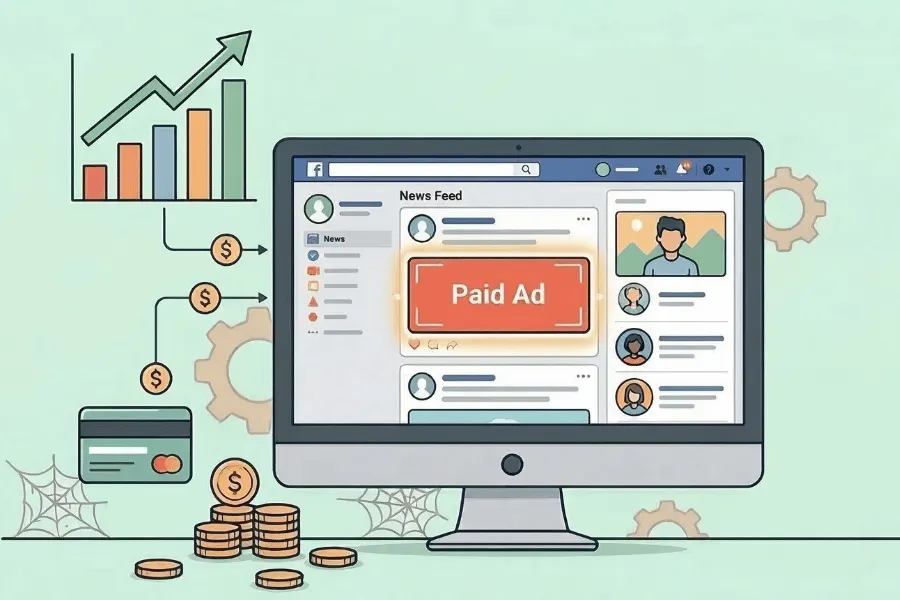
Paid social media advertising has become one of the most influential digital marketing strategies for businesses across industries. With billions of users active daily on platforms such as Facebook, Instagram, LinkedIn, TikTok, and YouTube, companies now have unprecedented opportunities to reach highly targeted audiences. Paid campaigns allow businesses to promote products, generate leads, build brand awareness, and drive conversions with measurable performance data.

Understanding Paid Social Media Advertising: Marketing Agencies vs In-House Social Media Manag6ement for Social Media Marketing
Paid social media advertising refers to the use of sponsored posts, targeted ads, and promotional content on social platforms to reach a specific audience and improve brand awareness through paid advertising. Businesses often decide between in-house vs a professional social media marketing agency when planning their social media marketing efforts. Options include managing social media in-house with an in-house marketing team, building an in-house structure with an in-house marketer or social media manager, or outsourcing social media to a professional agency or external agency.
Many marketing experts suggest evaluating marketing agencies vs in-house solutions based on business goals, available time and resources, and the level of expertise required for developing and executing campaigns. While maintaining an in-house team offers direct control and deep brand knowledge with a strong understanding of your brand, agencies bring a wide range of expertise from working across various industries. Agencies can quickly scale, often have access to advanced tools, and can maximize the effectiveness of campaigns. However, working with an external team may involve communication challenges, and the choice for your business depends on several factors including marketing goals and budget.
Whether you work with an agency or hire a full-time employee to handle social media, the goal is to get the job done effectively and achieve better campaign performance. We’ll explore the pros and cons, advantages and challenges, and help you make the best choice when considering an agency or an in-house team, so companies can find the best choice for your business and focus on developing and executing strategies that deliver results.
Common Types of Paid Social Media Ads for Social Media Marketing Campaigns
Businesses use different formats depending on their marketing objectives.
- Sponsored image posts
• Video advertisements
• Carousel ads with multiple products
• Lead generation forms
• Shopping ads
• Story ads
• Retargeting campaigns
These formats allow companies to present products, collect leads, or guide users toward landing pages.
Advertising Pricing Models
Paid social campaigns typically operate using auction-based pricing models.
| Pricing Model | Description |
| CPC | Cost per click, where advertisers pay when someone clicks the ad |
| CPM | Cost per 1,000 impressions |
| CPA | Cost per acquisition or conversion |
| CPL | Cost per lead generated |
The ability to track performance metrics such as clicks, conversions, impressions, and cost per acquisition makes social media advertising one of the most measurable marketing channels.
Key Platforms for Paid Social Media Advertising
Each social platform has unique strengths and audience demographics, making them suitable for different marketing goals.
| Platform | Key Strength | Best Use Case |
| Facebook & Instagram | Advanced targeting and large audiences | E-commerce, local businesses |
| Professional targeting | B2B marketing and lead generation | |
| TikTok | Viral short-form video content | Brand awareness and younger audiences |
| YouTube | Long-form video engagement | Product education and storytelling |
| Visual discovery and inspiration | Retail, fashion, and lifestyle brands |
Many companies use a multi-platform advertising strategy to maximize reach and improve campaign performance.
Advantages of In-House Management
Deep Understanding of the Brand
Internal employees usually have a stronger understanding of the company’s brand identity, mission, products, and customers. This knowledge helps ensure that advertising campaigns reflect the company’s messaging and values.
Greater Control Over Campaigns
Businesses that manage advertising internally maintain complete control over campaign decisions. Marketing leaders can adjust budgets, test strategies, and implement new campaigns without relying on external partners.
Faster Internal Collaboration
Internal teams can communicate directly with other departments. For example, they can quickly collaborate with product managers to promote new features or coordinate with sales teams to generate qualified leads.
Alignment With Long-Term Strategy
Employees working within the organization often have a deeper commitment to the company’s long-term growth. They can develop campaigns that align with broader marketing initiatives and business goals.
Challenges of In-House Social Media Management for Digital Marketing Teams
Higher Fixed Costs
Building an in-house marketing team or maintaining an in-house team for managing social media in-house can be costly. Companies must cover salaries for an in-house marketer or social media manager, employee benefits, training programs, and marketing software subscriptions. For many businesses, outsourcing social media to a professional agency or external agency may be more cost-effective than maintaining a full internal department.
Limited Skill Diversity
Successful paid advertising and social media marketing efforts require a wide range of expertise. Tasks such as audience targeting, creative design, conversion optimization, data analysis, and copywriting often require different marketing experts. A small in-house social media or dedicated team may lack the level of expertise needed to develop and execute high-performing campaigns across various industries.
Constant Platform Updates
Social media platforms frequently update algorithms, targeting tools, and ad formats. Keeping up with these changes requires significant time and resources. Marketing agencies and professional social media marketing agency teams often stay updated because they work across various industries, while companies handling social media internally may struggle to keep pace.
Difficulty Scaling Campaigns
As paid advertising budgets increase, companies often need additional staff to handle social media campaigns. Building an in-house structure means businesses may need to hire a full-time employee or expand the marketing team. In comparison, agencies can quickly scale campaigns because they already have an external team and systems in place to support growing business goals.
Advantages of Professional Social Media Marketing Agency Management
Access to Specialized Expertise
Marketing agencies employ teams of specialists who focus on specific areas such as media buying, creative design, analytics, and conversion optimization. This allows businesses to benefit from advanced skills that may not exist internally.
Faster Campaign Optimization
Experienced agencies use proven frameworks and testing strategies to improve campaign performance quickly. They often know which tactics work best for different industries.
Advanced Tools and Technology
Professional marketing teams use premium analytics platforms, attribution software, and automation tools to monitor performance and optimize campaigns. These tools can be expensive for individual businesses to purchase independently.
Scalability and Flexibility
Outsourcing makes it easier to scale campaigns. Agencies can quickly increase advertising budgets or launch campaigns on additional platforms without requiring businesses to hire new employees.
Cross-Industry Insights
Because agencies work with multiple clients across various industries, they gain valuable insights into trends, benchmarks, and best practices.
Challenges of Professional Management
Reduced Direct Control
When campaigns are outsourced, businesses must rely on external partners to execute strategies and make daily optimization decisions.
Communication Barriers
If an agency does not fully understand the company’s brand voice or target audience, marketing messages may become inconsistent.
Management Fees
Professional services require additional costs. Agencies usually charge a monthly retainer or a percentage of advertising spend.
In-House vs Professional Management Comparison
| Factor | In-House Management | Professional Management |
| Cost Structure | Salaries and tools | Retainer or percentage of ad spend |
| Expertise | Limited to internal staff | Access to multiple specialists |
| Control | Full internal control | Shared with agency |
| Speed | Slower campaign setup | Faster execution |
| Scalability | Requires hiring | Easily scalable |
| Industry Insights | Limited | Broad market knowledge |
Cost Comparison
Understanding the total cost of each option helps businesses make informed decisions.
| Expense | In-House Team | Agency |
| Salaries | High | Included |
| Benefits | Additional cost | Not required |
| Marketing tools | Separate subscriptions | Often included |
| Training | Continuous expense | Usually included |
| Agency fee | Not applicable | Monthly or % of spend |
While agencies charge management fees, they may still be more cost-effective for smaller companies because businesses gain access to an entire team rather than hiring multiple employees.
Performance and ROI Considerations
Advertising performance often depends on expertise, campaign structure, and data analysis.
Professional agencies may achieve stronger results because they:
- run continuous A/B tests
- analyze large amounts of campaign data
- use advanced optimization tools
- apply industry benchmarks
However, internal teams may outperform agencies if they possess deep knowledge of their audience and maintain strong collaboration with other departments.
Many organizations adopt a hybrid approach, combining internal strategy oversight with agency execution.
Factors That Influence the Best Choice
Several factors determine whether businesses should manage social media advertising internally or externally.
Business Size
Small businesses often lack the resources to build full marketing teams, making agencies a practical option.
Medium-sized companies may combine internal marketing managers with agency specialists.
Large organizations frequently build internal teams but still collaborate with agencies for specialized campaigns.
Advertising Budget
Advertising budget size significantly influences management decisions.
| Monthly Ad Budget | Recommended Approach |
| Under $10,000 | Outsource to agency |
| $10,000–$50,000 | Hybrid model |
| Over $50,000 | Internal team with agency support |
Campaign Complexity
Campaigns involving multiple countries, languages, or platforms typically require advanced expertise that agencies are better equipped to handle.
The Role of AI and Automation in Paid Social Advertising
Artificial intelligence is transforming how social media advertising campaigns are managed.
Modern advertising platforms now include:
- automated bidding strategies
• predictive audience targeting
• machine-learning campaign optimization
• AI-generated ad creatives
• advanced attribution models
These technologies reduce manual work and help advertisers optimize campaigns in real time.
Best Practices for Successful Paid Social Campaigns
Regardless of whether campaigns are managed internally or externally, successful advertising strategies follow several best practices.
Define Clear Marketing Objectives
Businesses must identify whether their goal is brand awareness, lead generation, website traffic, or product sales.
Test Multiple Creative Variations
Testing different headlines, visuals, and calls-to-action helps identify the most effective messaging.
Optimize Landing Pages
Advertising success depends not only on the ad itself but also on the landing page experience.
Use Data-Driven Decision Making
Campaign performance data should guide budget allocation and optimization strategies.
Implement Retargeting Strategies
Retargeting allows businesses to re-engage users who previously interacted with their website or ads.
Frequently Asked Questions
Is it better to manage social media ads in-house or outsource them?
It depends on your budget, expertise, and campaign complexity. Small businesses often benefit from agencies, while large companies may prefer internal teams.
How much does professional social media ad management cost?
Most agencies charge between 10% and 20% of ad spend or a monthly retainer depending on campaign size.
What ROI can businesses expect from paid social media advertising?
Many campaigns generate strong returns, often producing multiple dollars in revenue for every dollar spent when campaigns are optimized effectively.
When should a business build an in-house advertising team?
Companies with large advertising budgets and ongoing campaigns often benefit from developing internal teams.
What is a hybrid social media advertising strategy?
A hybrid strategy combines internal marketing teams with external agencies to balance expertise, scalability, and brand control.
Conclusion
Paid social media advertising plays an important role in modern digital marketing and social media marketing. Businesses must decide whether to manage campaigns with an in-house team or outsource to marketing agencies or digital marketing agencies. An in-house marketing team gives more control over content creation, social media strategies, and social media efforts, but the team may lack advanced analytics skills and scalability.
On the other hand, hiring an agency or outsourcing social media provides expert support from a social media specialist, though it may result in less control. Evaluating the pros and cons of each option will help you decide the best choice for your business needs and improve overall ROI.