In Canada, nearly 8 million people speak French as their first language, most of them in Quebec. If your service business only targets English speakers, you’re leaving a massive portion of the market untapped. That’s where Bilingual SEO comes in.
In this article, you’ll learn how to use translation, dual-language optimization, language schema, and culturally sensitive keyword strategies to reach both English and French-speaking Canadians, without duplicating your entire site or confusing users.
Let’s break it down by opportunity, strategy, and implementation.
1. Market Benefits: Why Bilingual SEO Matters
1.1 Expand Visibility in French-Speaking Regions
If your business operates in or near Quebec, bilingual SEO isn’t optional—it’s a growth lever. Google prioritizes content in the searcher’s language, especially in regional searches.
Quick Facts:
- 85% of Quebecers prefer doing business in French
- Google.ca automatically geotargets based on language preferences
- French-language competition is often lower in SEO, offering faster wins
1.2 Build Local Trust and Authority
Speaking the local language signals respect, inclusion, and reliability. It’s not just about translation—it’s about connection. Bilingual content drives more engagement and conversions in mixed-language households.
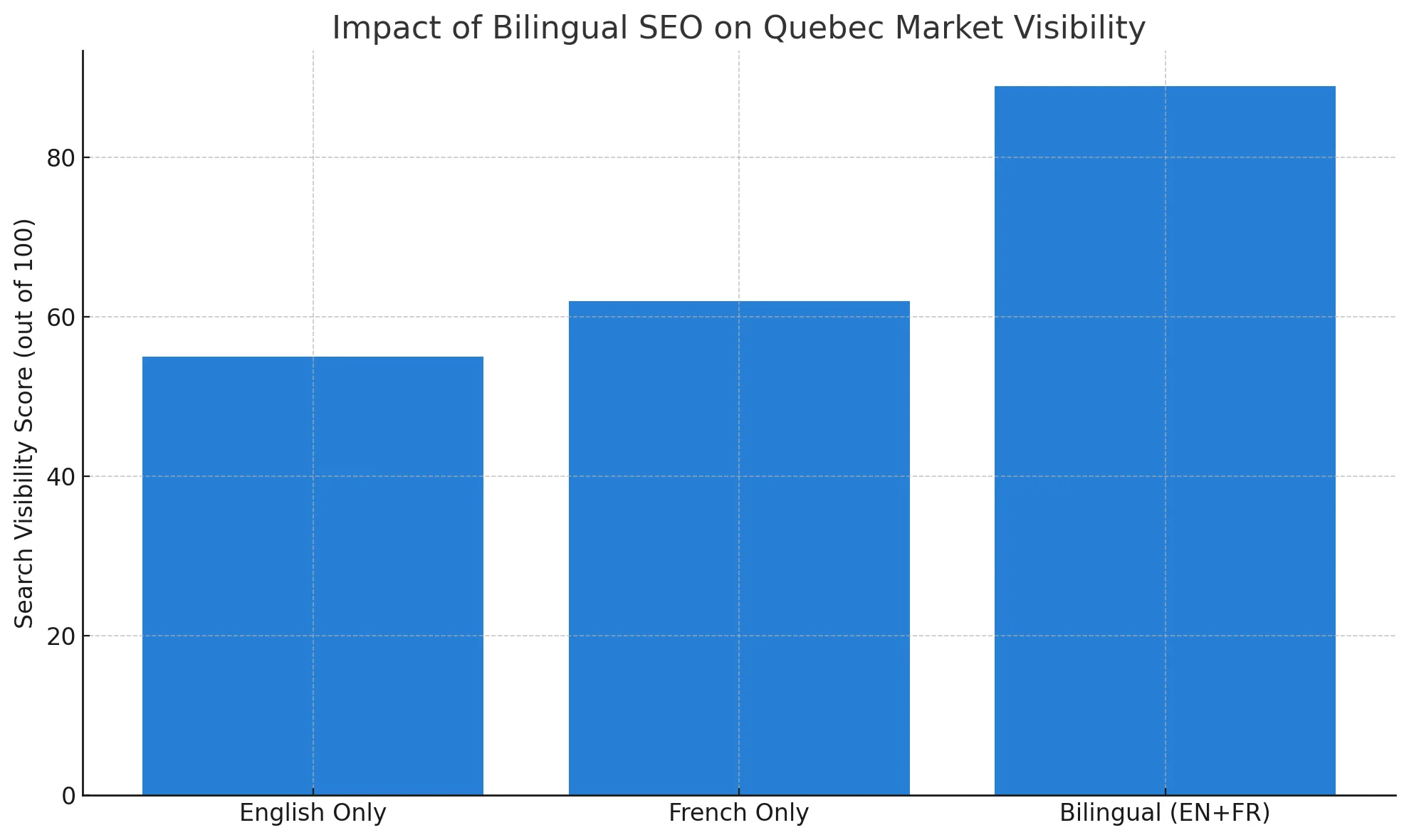
1.3 Graph: Impact of Bilingual SEO on Quebec Market Visibility
2. Bilingual Keyword Research
Effective bilingual SEO starts with bilingual keyword research, not just direct translation.
2.1 Don’t Translate Keywords – Localize Them
Google Translate won’t cut it. For example:
| English Term | Literal French Translation | Better SEO Term (Localized) |
| “roof repair” | réparation de toit | réparation toiture |
| “plumber near me” | plombier près de moi | plombier local |
| “home renovation” | rénovation de la maison | rénovation résidentielle |
Use tools like:
- Google Keyword Planner (set to French/Canada)
- SEMrush or Ahrefs (language filter)
- Ubersuggest (keyword suggestions by region and language)
2.2 Use Both Keywords Strategically
You don’t need to stuff both versions into the same page. Instead:
- Create separate French and English pages
- Use hreflang tags to point users to the correct version
- Use language schema to tell search engines what content is in what language
3. Content Translation: Do It Right or Don’t Do It at All
Proper translation isn’t just switching words—it’s rethinking tone, idioms, and even call-to-actions.
3.1 Use Native Translators or Localization Experts
Invest in professional translation. Google penalizes poorly translated content, especially if the syntax is off. A misplaced verb or gender error can erode trust instantly.
3.2 Keep Formatting and Layout Consistent
When translating your content:
- Match the layout of the English version
- Translate all UI elements (buttons, headers, menu items)
- Use mirrored page slugs (e.g., /roof-repair and /reparation-toiture)
3.3 Watch Out for Regional Dialects
French spoken in Montreal isn’t the same as in Paris. Use Canadian French to avoid awkward or irrelevant translations. This is especially important for:
- Service names
- Product specs
- Legal/compliance text
4. User Experience Considerations
Creating a dual-language site doesn’t mean creating a confusing one. The user experience should feel natural, intuitive, and culturally aware.
4.1 Clear Language Switcher
Add a toggle or dropdown in the top right of your site to switch between English and French. Make sure:
- The switcher is visible on every page
- URLs change appropriately
- The selected language is remembered in session
4.2 Match Service Areas and Reviews
If your service areas cover Montreal, Gatineau, or Sherbrooke, use localized Google Business Profiles with bilingual listings and posts.
Also, encourage a dual-language review flow:
- Ask English-speaking clients to review in English
- Ask French-speaking clients to review in French
- Google displays reviews based on user language preferences
4.3 Graph: Preferred Languages for Reviews in Quebec Regions
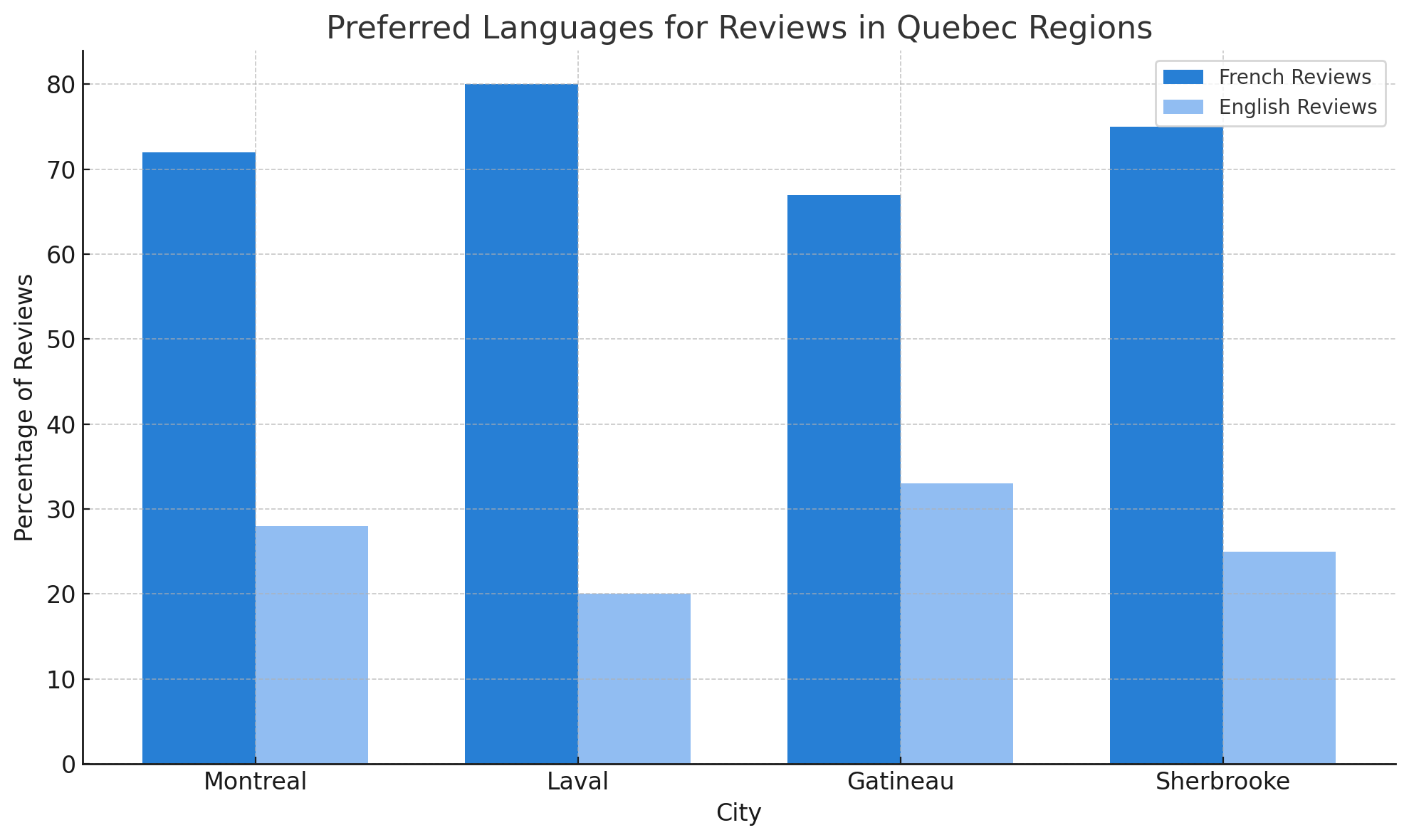
| City | % French Reviews | % English Reviews |
| Montreal | 72% | 28% |
| Laval | 80% | 20% |
| Gatineau | 67% | 33% |
| Sherbrooke | 75% | 25% |
This highlights the importance of collecting bilingual testimonials.
5. Technical SEO for Bilingual Sites
If you want Google to treat your English and French content properly, you need to follow some key technical steps.
5.1 Use hreflang Tags
Tell Google which version of the page is for which audience. Example:
<link rel=”alternate” hreflang=”en-ca” href=”https://example.com/en/roof-repair” />
<link rel=”alternate” hreflang=”fr-ca” href=”https://example.com/fr/reparation-toiture” />
This avoids duplicate content issues and sends users to the correct version based on their language settings.
5.2 Use Subfolders or Subdirectories
Recommended setup:
- example.com/en/ for English content
- example.com/fr/ for French content
Avoid using machine-translated dynamic pages, they’re bad for SEO and UX.
5.3 Localize Meta Tags and Alt Text
Each version of your page should have:
- Unique meta title and description in the correct language
- Localized image alt text
- Localized Open Graph (OG) tags for social sharing
6. Bilingual Blogging: Content That Reaches Both Audiences
Don’t just translate service pages. Create bilingual blog posts too. Topics like:
- “Home Renovation Grants in Quebec (2024 Update)”
- “When to Replace Your Roof in Montreal’s Harsh Winters”
- “Electric Panel Upgrades: Code Differences in Ontario vs. Quebec”
You can either:
- Publish the same article in both languages with proper hreflang
- Or publish region-specific, language-targeted blog content
Tip: Use quotes or case studies in the original language. It adds credibility and context.
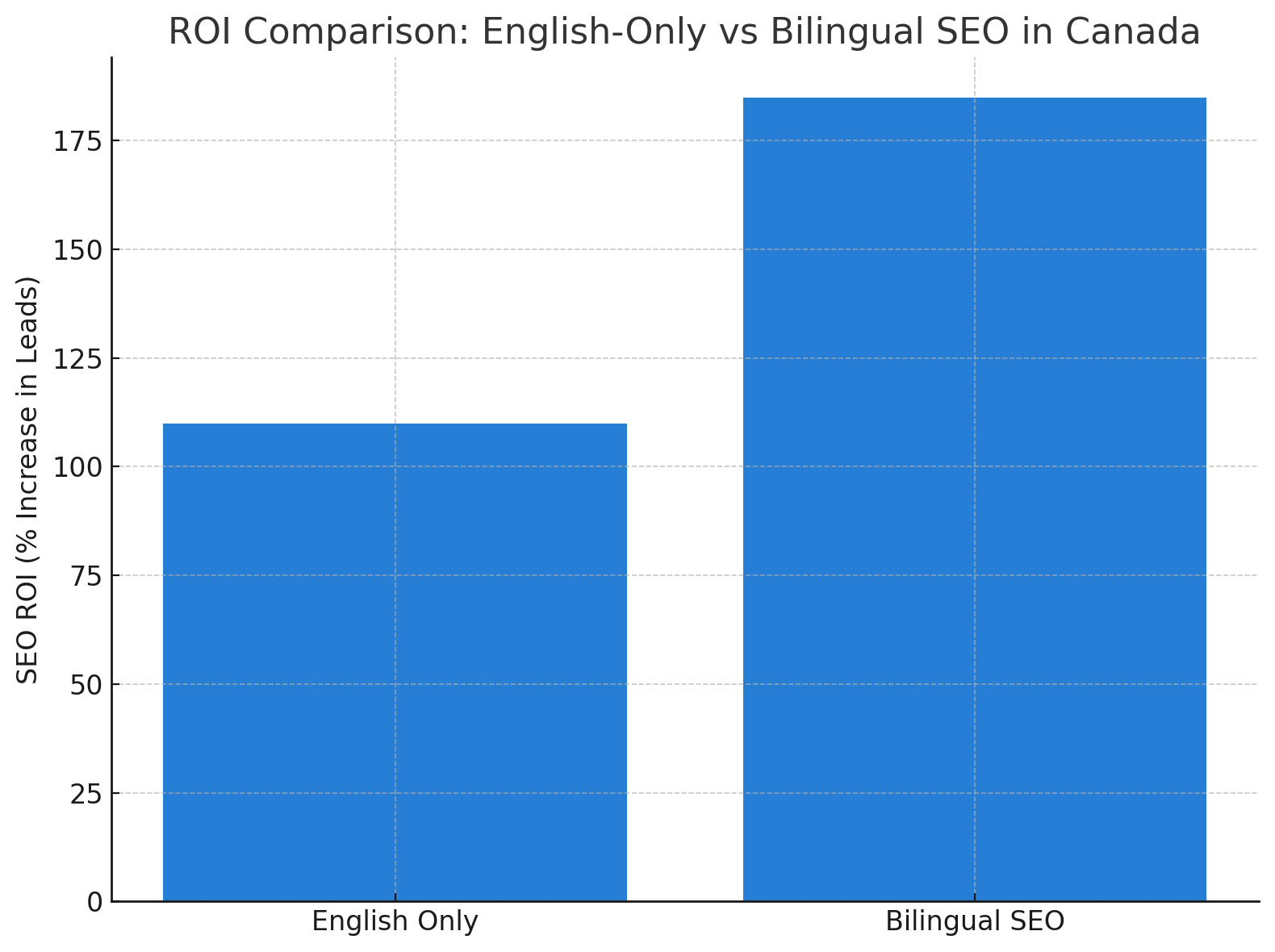
6.1 Graph: ROI Comparison: English-Only vs Bilingual SEO
Demonstrates how bilingual SEO delivers significantly higher lead generation than English-only strategies.
6.2 Bonus: Language Schema Markup
Use schema.org markup to declare the language of your page. This helps search engines understand and rank content properly.
7. Summary: Bilingual SEO Strategy Checklist
- Research localized keywords in both languages
- Use Canadian French, not Parisian
- Create separate language pages with mirrored structure
- Implement hreflang and language schema
- Translate UI, metadata, and CTAs
- Encourage reviews in both languages
- Blog in both English and French where possible
Common Questions About Bilingual SEO for Canadian Tradesmen
Q1: Do I need a completely separate website in French?
Not necessarily. A subdirectory setup (like /fr/) with mirrored pages and hreflang tags works well for most businesses.
Q2: Will Google penalize me for duplicate content if I post the same content in two languages?
No. As long as you use hreflang tags and make sure each version is clearly marked for its audience, you’re safe.
Q3: How do I handle reviews in two languages?
Encourage users to leave reviews in their preferred language. Google will prioritize displaying reviews in the user’s own language.
Q4: What if I don’t speak French? How can I ensure my translations are accurate?
Hire a professional translator familiar with Canadian French, or use a localization service. Don’t rely solely on Google Translate.
Q5: Is bilingual SEO only relevant in Quebec?
While Quebec is the biggest French-speaking market, bilingual content can also help businesses in New Brunswick, Ottawa, and other bilingual communities across Canada.
Final Thoughts: One Country, Two Languages, Infinite Reach
Bilingual SEO isn’t just a tech task, it’s a growth strategy. It shows you understand your audience, respect their preferences, and serve them on their terms.
Whether you’re a contractor in Montreal or a landscaper in Ottawa, building a dual-language site helps you rank higher, convert better, and grow faster. The Quebec market is unique, valuable, and underserved by many competitors who rely on English-only sites.
Want help planning or implementing your bilingual SEO strategy? Let’s build a roadmap for growth, en anglais ou en français.
We design high-performing websites and deliver SEO that gets results. Trusted by businesses across the UK, US, AU, and CA.
www.theseocrunch.com | theseocrunch@gmail.com