In modern search engine optimization (SEO), backlinks are one of the strongest ranking factors used by search engines like Google. A backlink is a link from one website to another, and it signals trust, authority, and relevance.
To improve rankings, marketers focus on building strong backlink profiles through competitor backlink analysis using a competitor backlink analysis tool. This helps study SEO competitors, perform link gap analysis, and run a backlink gap to find better link opportunities.
By analyzing backlink profiles, linking domains, URLs, SERP results, and competitors’ backlinks, you can understand competitor link-building strategies, conduct competitor analysis, and improve your own outreach. Tools like Moz or Semrush’s backlink analytics help identify guest post opportunities, industry publications, and websites already linking to competitors.
This process reveals low-hanging fruit, improves search visibility, and helps you build relevant links to outrank competitors in search results.

Understanding Competitor Backlinks, Backlink Profiles, and SEO Link Gap Analysis
Competitor backlinks are links pointing to websites that compete for the same audience, products, services, or keywords as your website.
For example:
If your business provides SEO services, competitors may include:
- Digital marketing agencies
- SEO blogs
- Software companies
- Local marketing firms
- Content marketing websites
When these websites receive backlinks from authoritative sources, their rankings improve. By studying these backlinks and analyzing the backlink profiles, you can link to multiple competitors, compare list of domains, and look for patterns in how links are earned across the industry.
This helps businesses discover:
- Websites willing to link to similar content
- Successful content marketing strategies
- Industry-specific directories
- Guest posting opportunities
- Broken link opportunities
- Resource page mentions
The goal of competitor backlink analysis is not to copy every backlink. Instead, the objective is to link to multiple competitors, understand why they earn links, analyze the backlink profiles, and look for patterns that can be improved for better SEO performance.
Why Competitor Backlink Analysis Is Important for SEO Competitors
Competitor backlink analysis provides valuable SEO insights that help businesses improve their rankings and organic visibility.
Main Benefits of Competitor Backlink Analysis
| Benefit | Explanation |
| Better SEO Strategy | Learn which backlink techniques work in your industry |
| Discover Link Opportunities | Find websites already linking to competitors |
| Improve Rankings | Build stronger authority signals |
| Save Time | Focus only on proven backlink sources |
| Content Insights | Discover content that naturally earns backlinks |
Google values backlinks because they represent recommendations from other websites. However, search engines focus more on backlink quality than quantity.
For example:
- One backlink from a respected industry publication can be more valuable than hundreds of low-quality links from spam websites.
This is why backlink quality analysis is critical.
Types of Backlinks You Should Analyze
Not every backlink provides the same SEO value. Some links improve rankings significantly, while others may harm website performance.
| Backlink Type | SEO Value | Example |
| Editorial Links | Very High | News article mentions |
| Guest Post Links | High | Industry blog contributions |
| Resource Page Links | High | Helpful tools or guides |
| Business Directory Links | Medium | Local business directories |
| Forum Links | Low-Medium | Community discussions |
| Social Media Links | Low | Social sharing platforms |
| Spam Links | Harmful | Automated link farms |
Understanding backlink types helps businesses prioritize valuable links while avoiding harmful SEO practices.
How to Identify SEO Competitors Using Analysis Tool for Link Opportunities and Outreach
Before analyzing backlinks, businesses must first identify their real SEO competitors.
SEO competitors are websites competing for the same search queries and keywords.
Methods to Find SEO Competitors:
- Search target keywords on Google
- Use Ahrefs Organic Competitors
- Use Semrush Competitive Research
- Analyze top-ranking pages
- Review Google Search Console data
For example:
If your website targets “digital marketing services,” competitors may include:
- marketing agencies
- SEO consultants
- content marketing blogs
- SaaS SEO tools
- local advertising firms
Identifying the correct competitors is important because backlink strategies vary by industry and niche.
Best Backlink Analysis Tools
Several SEO tools help marketers analyze competitor backlinks in detail.
| Tool | Main Features | Best For |
| Ahrefs | Backlink database and link intersect | Advanced SEO |
| Semrush | Competitor comparison and audits | All-in-one SEO |
| Moz | Domain authority analysis | Beginners |
| Majestic | Trust Flow and Citation Flow | Link quality analysis |
| Google Search Console | Website backlink monitoring | Free SEO analysis |
These tools help marketers:
- export backlink reports
- identify referring domains
- evaluate domain authority
- analyze anchor text
- discover lost backlinks
- compare competitors
Ahrefs and Semrush are especially popular because of their large backlink databases and advanced competitor analysis features.
Step-by-Step Competitor Backlink Analysis for SEO and Link Gap Analysis
Step 1: Identify Top Competitors
Choose 3–5 competitors ranking well for your target keywords.
Focus on websites with:
- strong organic traffic
- high domain authority
- quality content
- active SEO strategies
Avoid analyzing unrelated websites because irrelevant backlink data can create confusion.
Step 2: Export Competitor Backlinks
Use backlink analysis tools to export backlink reports.
Important Metrics to Analyze:
- Referring domains
- Dofollow links
- Nofollow links
- Anchor text
- Domain authority
- Organic traffic
- Spam score
These metrics help determine backlink quality and competitor SEO strength.
Step 3: Analyze Link Quality
Not every backlink deserves replication.
Characteristics of High-Quality Backlinks:
- Relevant websitescomp
- Strong domain authority
- Real organic traffic
- Natural anchor text
- Editorial placement
- Contextual relevance
Characteristics of Toxic Backlinks:
- Spam websites
- Irrelevant directories
- Automated comments
- Link farms
- Hidden links
- Manipulative paid links
Google’s spam policies strongly discourage unnatural backlinks because they attempt to manipulate rankings unfairly.
Step 4: Backlink Gap Analysis
Backlink gap analysis identifies websites linking to competitors but not linking to your website.
This strategy is extremely effective because:
- the website already links to similar content
- outreach success rates improve
- opportunities are highly relevant
Example:
If an industry blog links to three competitor websites but not yours, there is a strong chance they may also link to your content if it provides value.
This is one of the easiest ways to discover high-quality backlink opportunities.
Step 5: Analyze Competitor Content
One of the biggest goals of competitor backlink analysis is identifying content that attracts backlinks naturally.
Types of Content That Earn Backlinks:
- Research studies
- Statistics pages
- Industry guides
- Tutorials
- Case studies
- Infographics
- Free tools
For example:
A competitor may earn hundreds of backlinks through an SEO statistics page. Creating a more updated and detailed version can attract similar backlinks.
Search engines reward content that provides:
- value
- originality
- expertise
- trustworthiness
This aligns with Google’s EEAT guidelines.
Step 6: Understanding Anchor Text
Anchor text is the clickable text used in hyperlinks.
| Anchor Text Type | Example |
| Branded | OpenAI Blog |
| Exact Match | competitor backlink analysis |
| Partial Match | analyze backlinks effectively |
| Generic | Click here |
| Naked URL | https://example.com |
A natural backlink profile contains a healthy mix of anchor text types.
Overusing exact-match keywords may appear manipulative and can negatively affect SEO performance.
Competitor Link Building Strategies
Competitor backlink analysis reveals successful SEO tactics that businesses can learn from.
Common Competitor Link Building Methods:
- Guest blogging
- Digital PR campaigns
- Influencer collaborations
- Expert interviews
- Resource page outreach
- Broken link building
- Podcast appearances
- Data-driven studies
For example:
If competitors earn backlinks through research reports, creating better and more updated research can help attract similar links from websites that link to them and other domains that link in the same niche.
Understanding competitor link building strategy allows businesses to link to your competitors for research, gain actionable insights, and scale SEO more effectively by identifying what actually works in real-world link building.
How to Find High-Quality Link Opportunities
The best backlinks usually come from trusted and authoritative websites.
Best Sources for Backlinks:
- Industry blogs
- News websites
- Educational websites
- Resource pages
- Local directories
- Podcasts
- Expert roundup articles
Practical Link Building Methods:
- Publish original research
- Create useful resources
- Reach out to bloggers
- Replace broken links
- Build free tools
- Write guest articles
- Promote content through outreach
These methods support long-term SEO growth instead of short-term manipulative tactics.
Common Mistakes in Competitor Backlink Analysis
Many businesses make avoidable SEO mistakes while analyzing backlinks.
Mistakes to Avoid:
- Copying spam backlinks
- Buying low-quality links
- Ignoring relevance
- Over-optimizing anchor text
- Focusing only on quantity
- Ignoring lost backlinks
- Using outdated SEO tactics
Modern SEO focuses heavily on:
- quality
- relevance
- trust
- user experience
Search engines continue improving their ability to detect spam and manipulative SEO techniques.
How Often Should You Analyze Competitor Backlinks?
SEO changes continuously, so backlink monitoring should be regular.
| Website Type | Analysis Frequency |
| Small Blogs | Monthly |
| Business Websites | Every 2 weeks |
| Competitive Niches | Weekly |
| Enterprise SEO | Continuous monitoring |
Regular monitoring helps businesses:
- react to competitor strategies
- identify new opportunities
- track lost backlinks
- adapt to algorithm updates
SEO is constantly evolving, which means backlink analysis should be an ongoing process.
EEAT and Backlink Analysis
Google emphasizes EEAT:
- Experience
- Expertise
- Authoritativeness
- Trustworthiness
Backlinks from reputable websites strengthen these signals.
Examples:
- News mentions improve authority
- Expert citations improve trust
- Educational backlinks increase credibility
This is why backlinks from respected industry websites are more valuable than large numbers of low-quality links.
Businesses should focus on building genuine authority instead of manipulating rankings.
Future of Competitor Backlink Analysis
SEO is evolving rapidly because of:
- AI-powered search systems
- machine learning
- improved spam detection
- digital PR growth
- brand authority signals
Future SEO success will depend more on:
- trust
- authenticity
- user experience
- content quality
- relevance
Businesses focusing on ethical backlink strategies and high-quality content will perform better long-term.
Frequently Asked Question
What is competitor backlink analysis?
Competitor backlink analysis is the process of studying competitor backlinks to discover SEO opportunities and improve rankings.
Why are backlinks important for SEO?
Backlinks help search engines evaluate trust, authority, and relevance, improving organic search visibility.
Which tools are best for backlink analysis?
Ahrefs, Semrush, Moz, Majestic, and Google Search Console are popular tools used for backlink analysis.
How often should backlink analysis be performed?
Businesses should analyze competitor backlinks monthly or weekly in competitive industries.
Can bad backlinks harm SEO rankings?
Yes, spammy or manipulative backlinks can negatively affect SEO performance and trust.
Conclusion
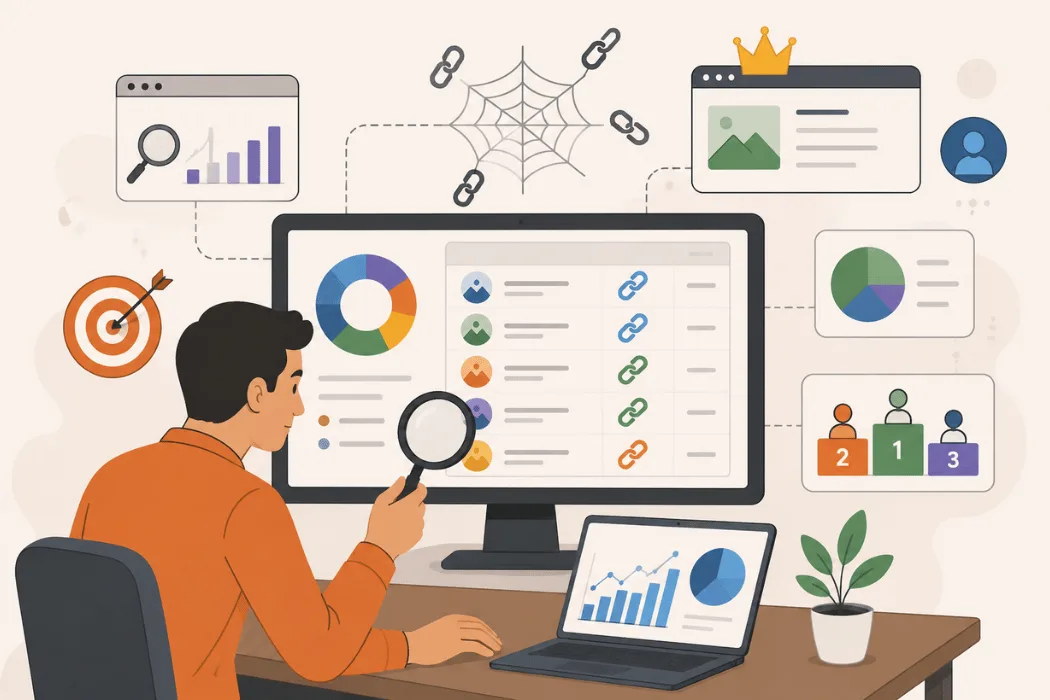
Competitor backlink analysis helps improve SEO by studying competitors’ backlinks and finding new link opportunities. Using a competitor backlink analysis tool, you can run a backlink gap, analyze backlink profiles, and compare SEO competitors, direct competitors, and major competitor data in the competitive landscape.
It supports competitor link analysis, keyword analysis, link quality analysis, and keyword research workflow to find URLs, site links, SERP results, and websites link patterns. You can conduct a competitor review in the marketplace, identify true competitors, and improve outreach efforts with site owners.
With Semrush’s backlink analytics and Moz authority metric, you can analyze competitors’ backlinks and competitors’ content, use link intersect, and find listicles, guest post, and link building opportunities. It helps discover highly relevant, link-worthy, low-hanging fruit from industry publications and linking domains that frequently link.
This strengthens link-building efforts, improves search visibility for ecommerce, and helps build links, outrank competing websites, and improve SEO using better content quality and relevant links.